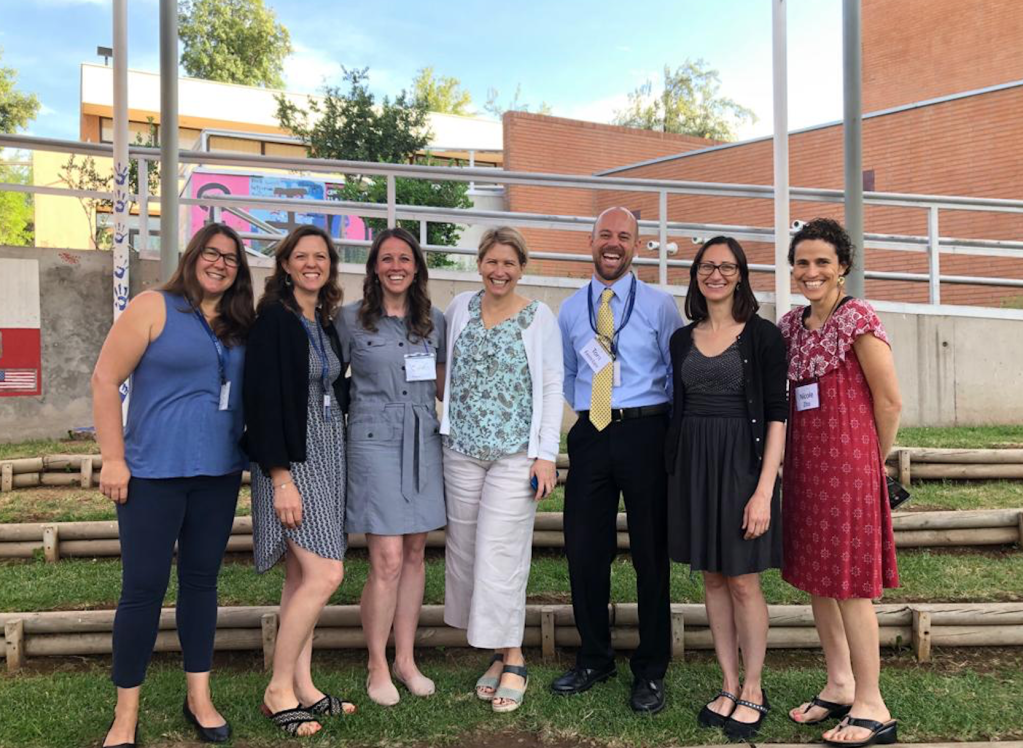
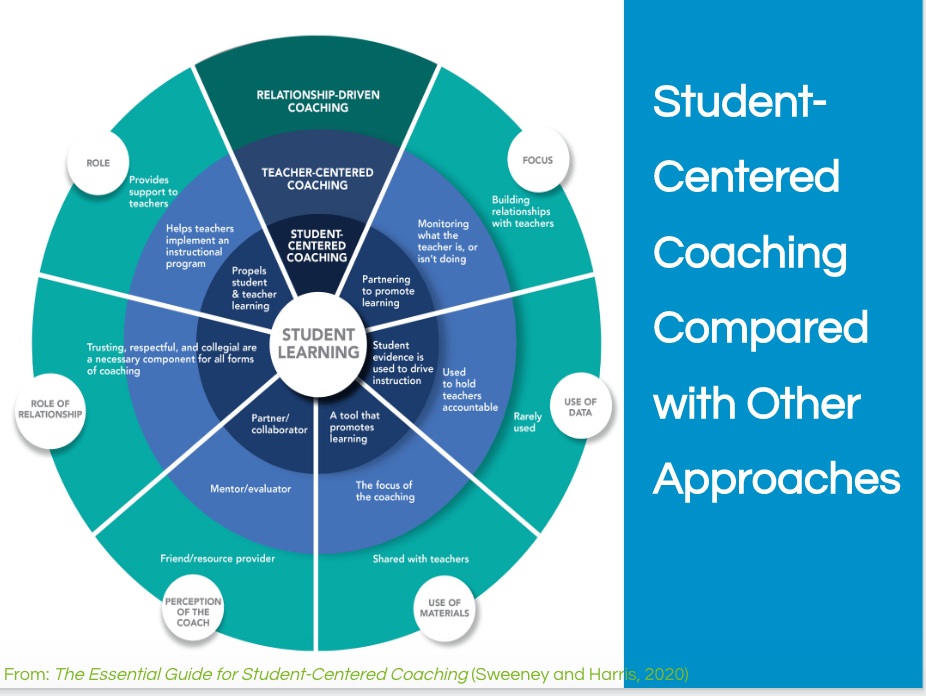
This past week, our coaching team, along with coaching guru, Diane Sweeney, led a symposium on student-centered coaching at our school, Nido de Aguilas. I have to admit that we postponed working in earnest on the individual workshops all November because we assumed that the symposium would be canceled due to the civil unrest. I am so glad that it was not canceled because the four day workshop was incredibly inspiring, grounding, and fulfilling. On Friday, I left the school feeling grateful to a part of an amazingly smart and collaborative team of learning coaches.
Our symposium lasted four days. Here is a copy of our agenda from the first day, which focused on curriculum coaching using the three stages of Understanding by Design. Each of the sessions was a combination of protocols, conversations, presentations, and activities.
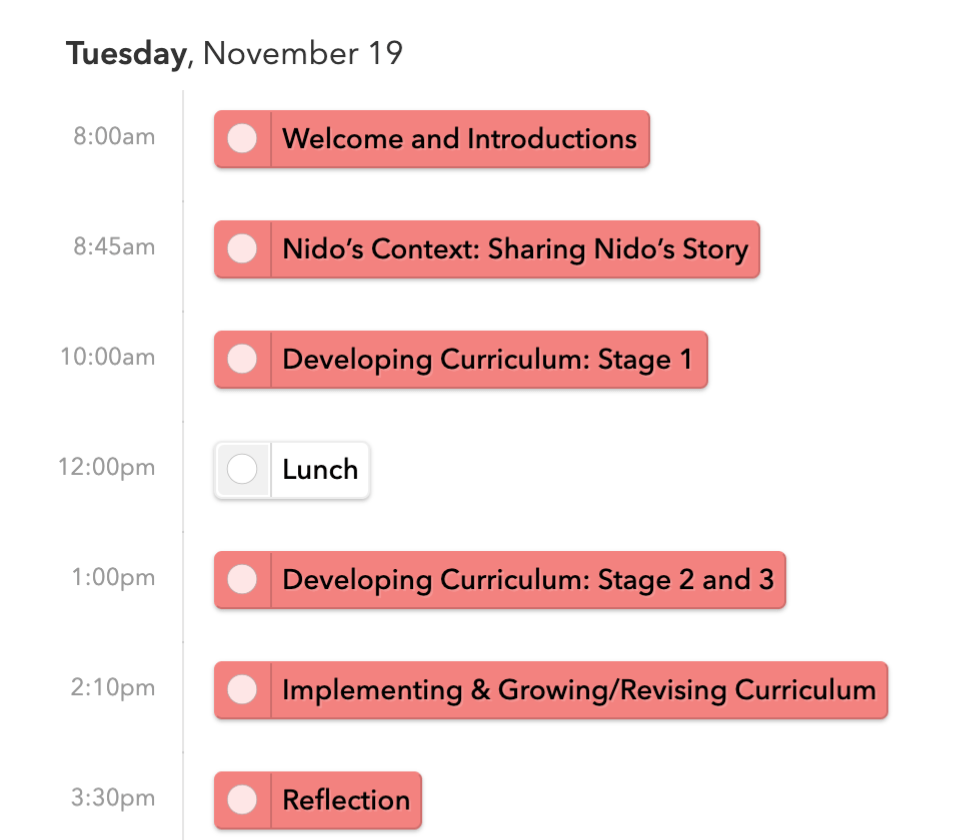
As a team, we co-developed and co-facilitated the welcome and our story. Then the team divided and conquered. Amber and I co-facilitated the session on developing curriculum for Stage 2 and 3. For this session, we used the following questions to drive our discussion of how to coach assessments and learning activities:
- How can we bring a student-centered lens?
- How can we find opportunities for content coaching?
- How might we facilitate the development of teams?
- How can we support learning around best practices?
For one of the activities, we had participants look at a personal essay rubric. They had to consider how to lead a conversation with a team about how you might write, revise, or enhancing this rubric. They had to discuss the following: What resources might you bring? What process might you use? What roadblocks might you anticipate? How might you use the rubric for rubrics? We also had prepared coaching dilemmas for participants regarding curriculum planning. We had teachers look at the 4 dilemmas you might face when planning learning experience. They had to consider how to lead a conversation with a team about each of these dilemmas, and discuss the questions given for their specific dilemma.
Diane Sweeney arrived on this day, and we took her out to dinner. Tom and I are new to the coaching team this year. It was challenging to be in our fourth month as learning coaches and take a lead in this symposium. The other coaches have been working together for the last five years primarily in the elementary school. They have developed a program with an extensive coaching menu that is very true to the high standards of student-centered coaching.
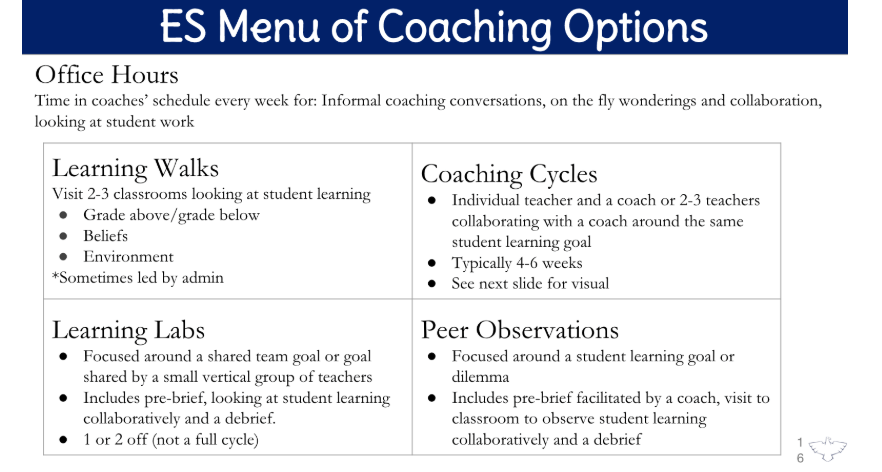
One of the jokes that we shared with Diane was how Tom and I feel like the team is passing us a baby golden retriever. As we develop the structures and systems for coaching in the high school, we often say to each other “Just don’t kill the puppy.” The team has been very supportive, but there have been moments this semester when a coaching cycle prematurely ended or a team of course alike teachers is not collaborating around curriculum work that make me fear that I may be killing the puppy. This week though, I received the affirmation and support that we are on track.
On the second day, many of us had the opportunity to take a learning walk in which we traveled to four elementary school classrooms. Prior to the walk, we looked at our core values and picked the one to individually focus on. We generated “look fors” in student behavior and then went into the classrooms. After each 10 minute observation, we commented on what we saw in terms of engagement, adaptability, and happiness in the classroom (three of our core values). We left teachers thank you notes and then debriefed as a group. I found the experience to help clarify what the values mean, and even though we were in lower school classrooms, I saw lots of student learning relevant to all grades such as working with others and getting into and sustaining flow.
I also lead a learning lab for a co-planning session with a grade 11-12 high school applied science teacher. Six other participants joined this session. Diane Sweeney facilitated the pre-brief; participants watched as I lead a co-planning meeting. Together we celebrated learning, looked at student work, co-developed a lesson based on our learning targets, and discussed how to co-teach the class on developing reliable survey instruments. Observers took notes regarding my moves as a facilitator and then discussed those in a debrief together.
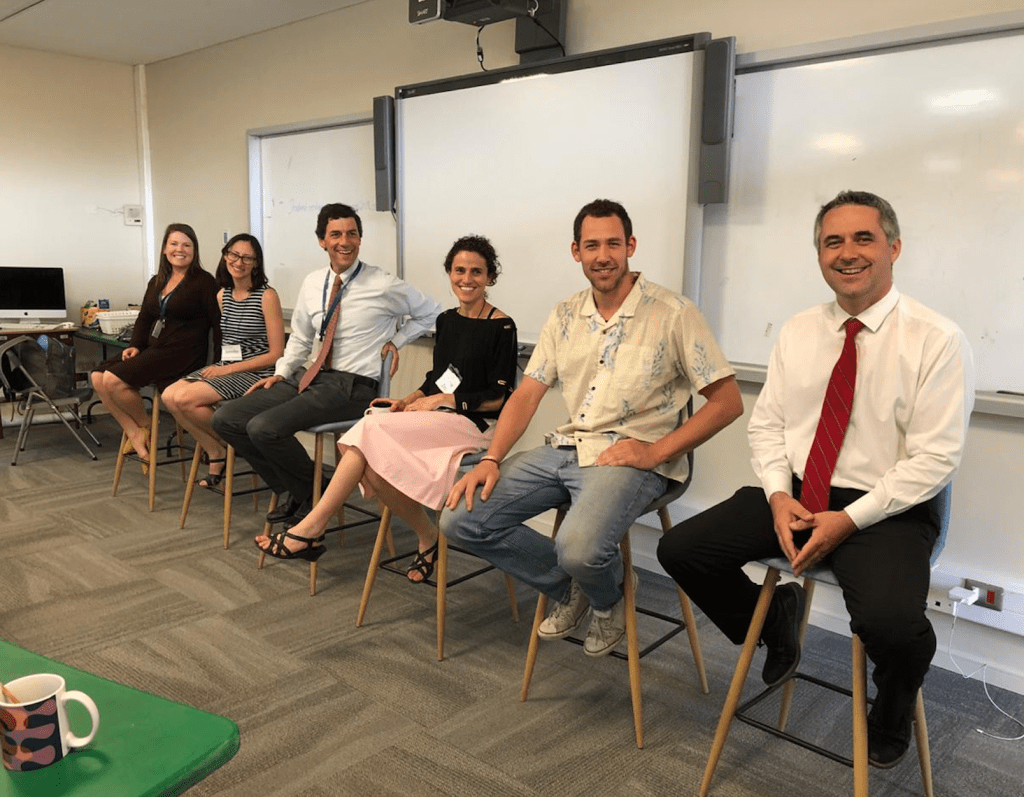
At the end of the day, I was on a panel with another coach, two administrators, and two teachers to answer questions about our model in front of Symposium participants.
Later in the week, Amber and I co-facilitated a workshop on getting coaching cycles up and running through the lens of intentionality, visibility, and relationship building. We had participants practice a goal-setting session with a partner. We shared our tools and documents for getting mini-sessions up and running, celebrating cycles with the community, and launching coaching cycles. We shared with them a list of co-teaching options and then had them do a stoplight protocol to consider their comfort with each of the possible options. (Red was a stretch, yellow was a comfortable option, and green was an area of confidence).

By the end of the week, we were all exhausted and elated. I felt that the experience helped me to refine my own facilitation skills; I appreciated the knowledge and expertise of our team. It was tremendously rich to be able to both participate as a learner and lead simultaneously. I developed a relationship with Diane Sweeney. I look forward to a year of implementing all that we shared. Though I am missing Thanksgiving this year, I am feeling particularly grateful to be working at a school that has adopted such a robust student-centered model of supporting teachers.
 Living in Chile