It is hard to imagine that we have only been in Santiago for just three days, as we have already met so many wonderful people and accomplished so much. In retrospect, it is fairly remarkable that we were able to pack up our shipment, store our belongings in a storage unit, sell our house, sell our cars, say goodbye to everyone, pack our eight suitcases, secure a house, obtain visas, and buy a car in Chile. We could not have done it all without the Kobbs, Bendles, Harrisons, Knights, and Tingers who entertained our kids while we raced to clean, pack, and sell.
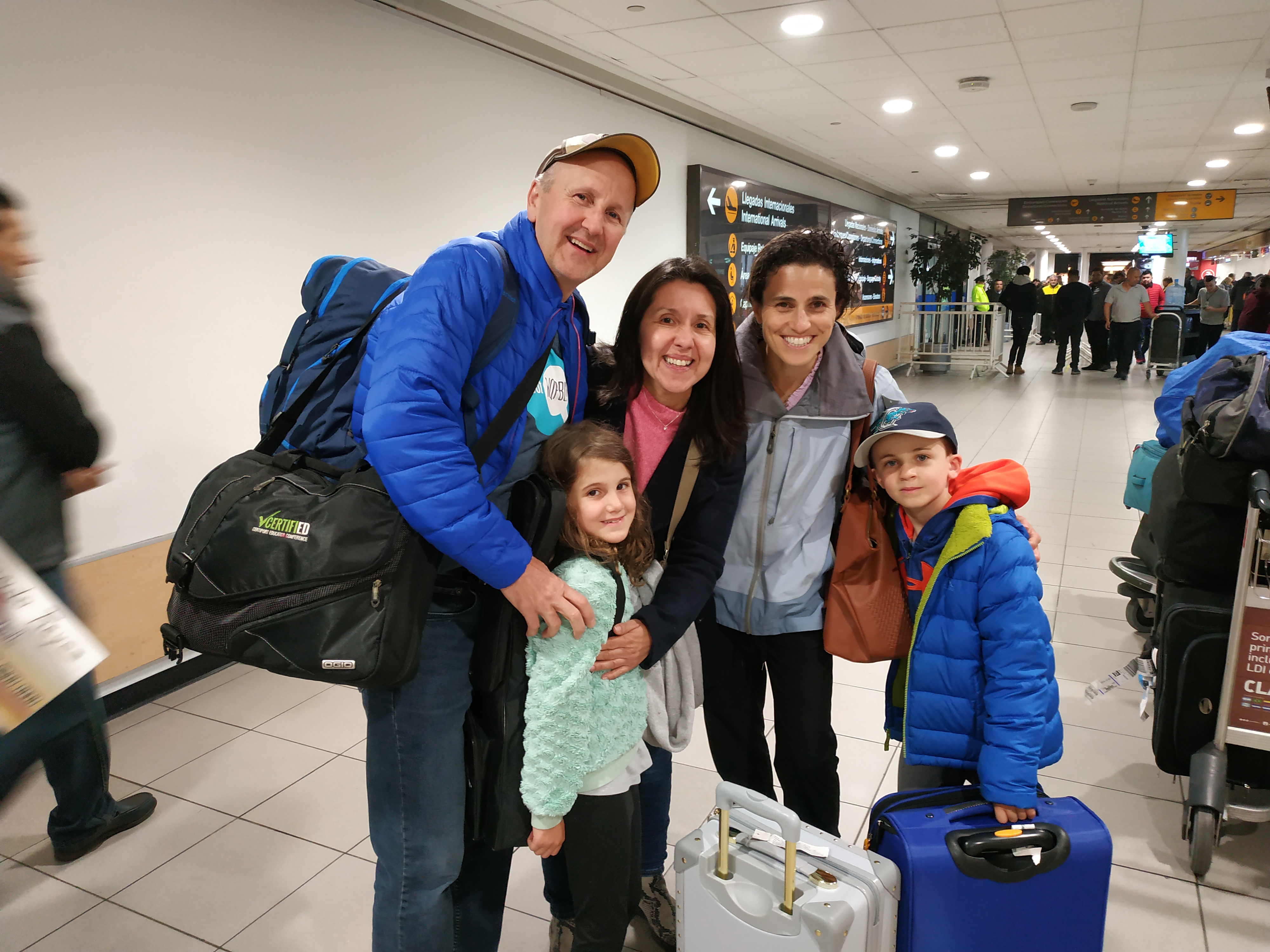
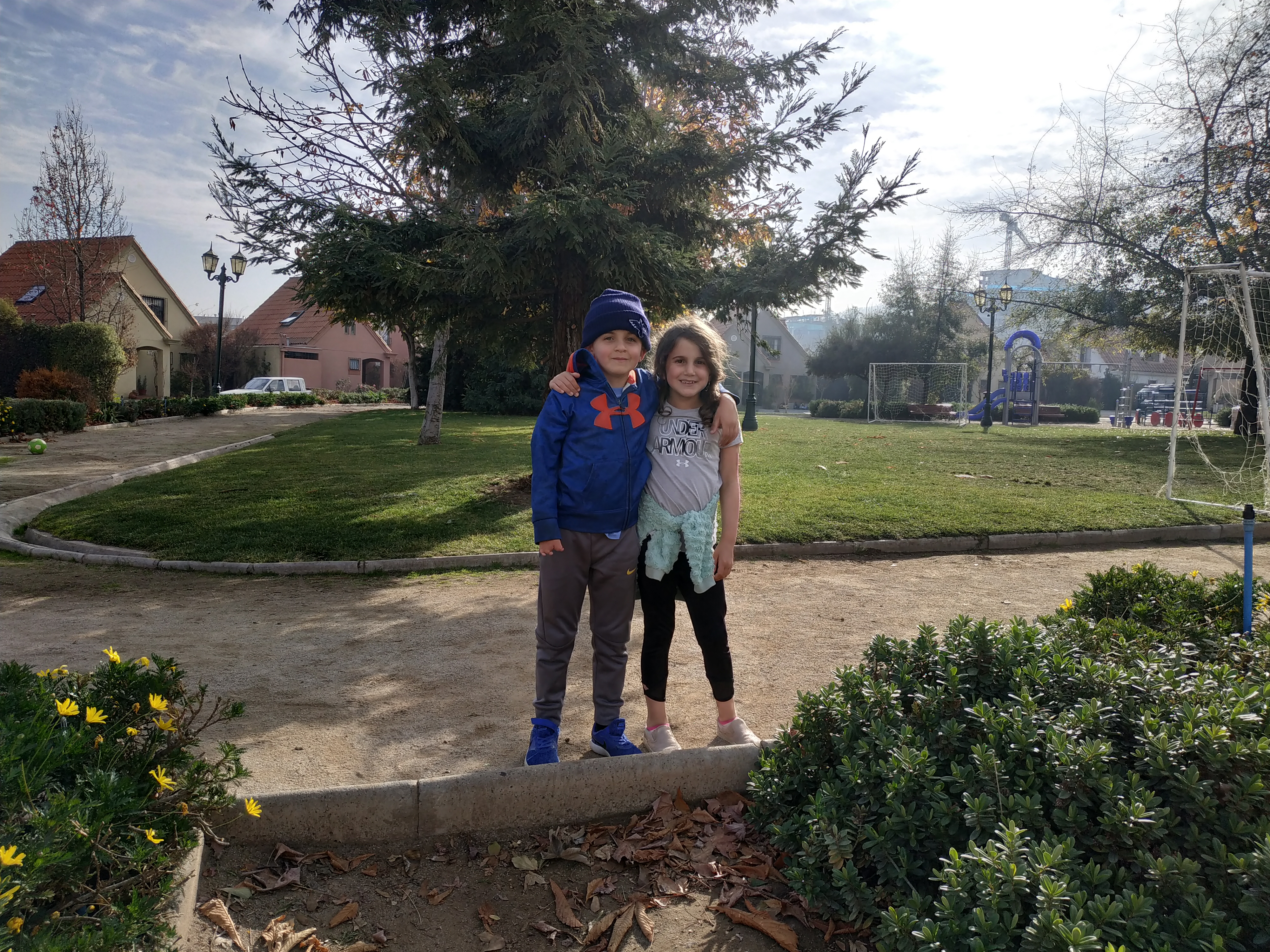
Though we missed our connection in Houston and arrived a day late, our social buddy, Vicky greeted us warmly at the airport in Santiago on July 9th, one day after Max’s 9th birthday. Right away, we had a tour of the school, which is an enormous and beautiful campus at the foot of the Andes. We visited our house, which is nearby in a sweet cul-de-sac with a playground in the middle. The kids already befriended a cat, who lives on our doorstep and two boys, Rafa and Leon. I nearly cried watching the kids all play soccer together.
Our stay at the Hotel Pettra in Santiago is a luxurious one. It is near the school, our house, and an enormous indoor/outdoor shopping plaza. We have been stocking our two hotel rooms with pillows, duvets, blankets, pots, and every other necessity we will need until our shipment arrives. It is very satisfying to purchase the things we need on our own. Chileans do not give out any plastic bags at the stores, so what a sight I must be walking past the doorman with my air mattress boxes and cat food. The money has been tricky for me. The conversion is roughly ten dollars to $7000 pesos. I feel like a fumbling child holding out my hand to the cashier with a handful of coins. Unfortunately, Portuguese continues to come out of my mouth, though I can understand a great deal of Spanish. My new Spanish phrases for the day? Pucha! (What a pity) Cachai? (Did you catch/understand it?)
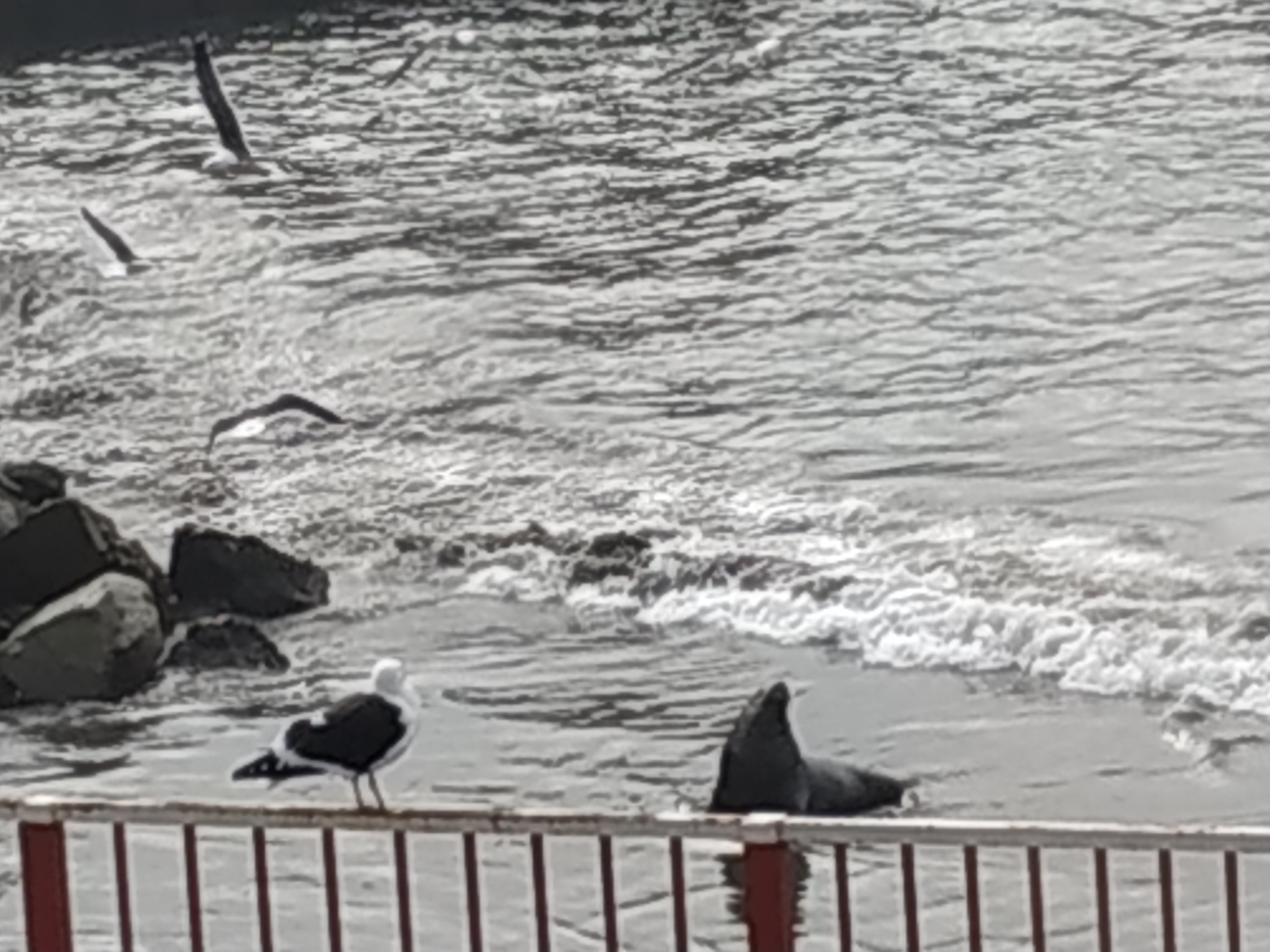
Sea Lion in Vinas
Today we took a trip to the coast to acquire our Chilean identification cards. We went to Vinas del Mar to expedite the process. Our appointment at the police office was uneventful; thankfully, our chaperone, Juan, caught a critical error before we left. Then we went to a dmv type office, and it took roughly two hours to finalize our documents and obtain our cedulares. We are official. Now we can conduct business ie.. obtain a bank account, driver’s license, credit cards, utilities, cable, etc… To celebrate we had a lovely lunch on the sea in a restaurant on a cliff overlooking sea lions and pelicans. The kids are embracing the experience, trying out some Spanish phrases, and taking it all in. We look forward to meeting other new teachers at a welcome dinner tomorrow and then moving into our house on Saturday. What a whirlwind start to our life. We feel like we made a great choice to be here.
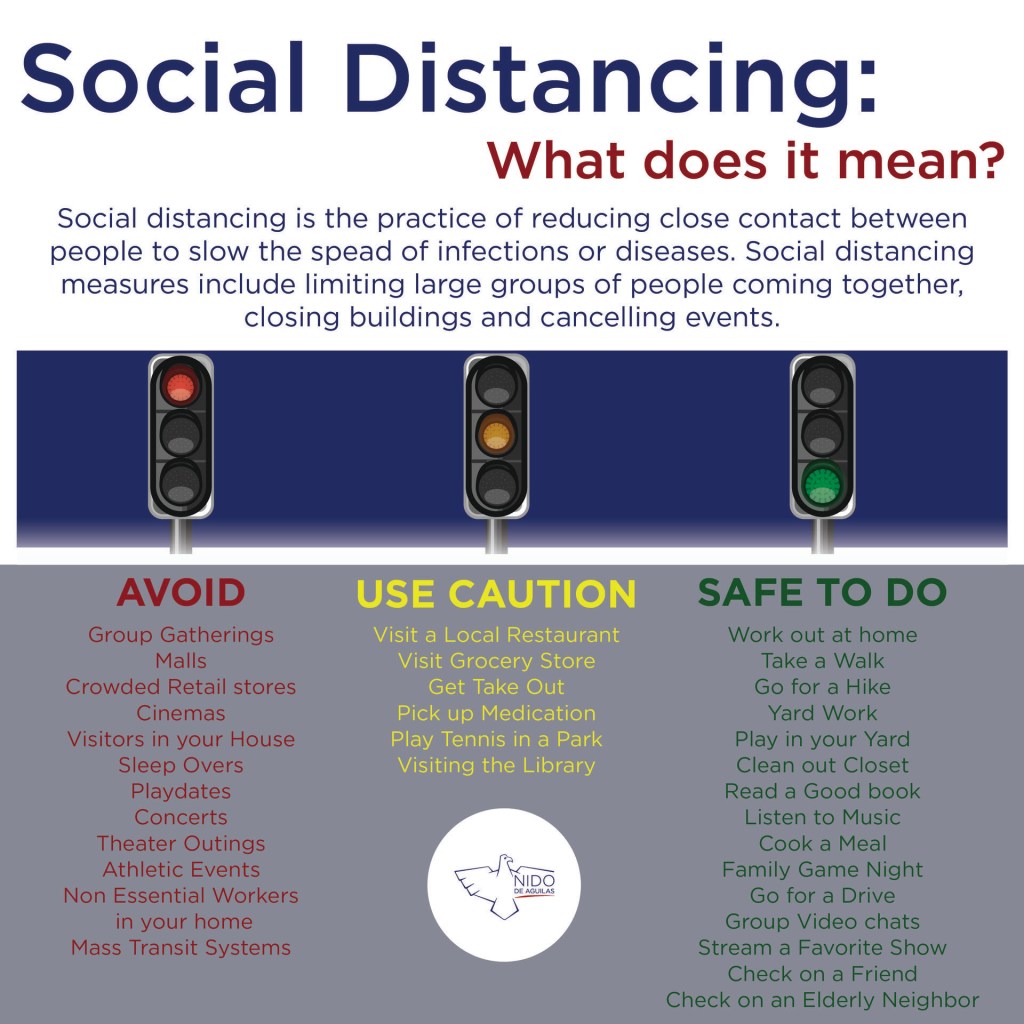
March was supposed to be a difficult month in Chile due to the referendum and planned civil unrest; however, even the civil unrest has been postponed due to Covid-19. Today, like schools all over the country we had our first dose of distance learning. The administration allowed teachers to go to the school through Wednesday to prepare and gather the materials that they will need to access from home, cancel that.
As I write, the school is closed for further notice even to teachers as President Sebastián Piñera just announced that Chile has moved to Phase 4 regarding COVID-19. As of today, there are 155 confirmed cases in Chile. What does Phase 4 mean? The World Health Organization (WHO) defines that at this stage, the virus is considered to have a “sustained transmission in the country”, with a possible exponential growth of the virus in the population. We will have at least two weeks of distance learning, but we are anticipating a longer period of school cancellation.
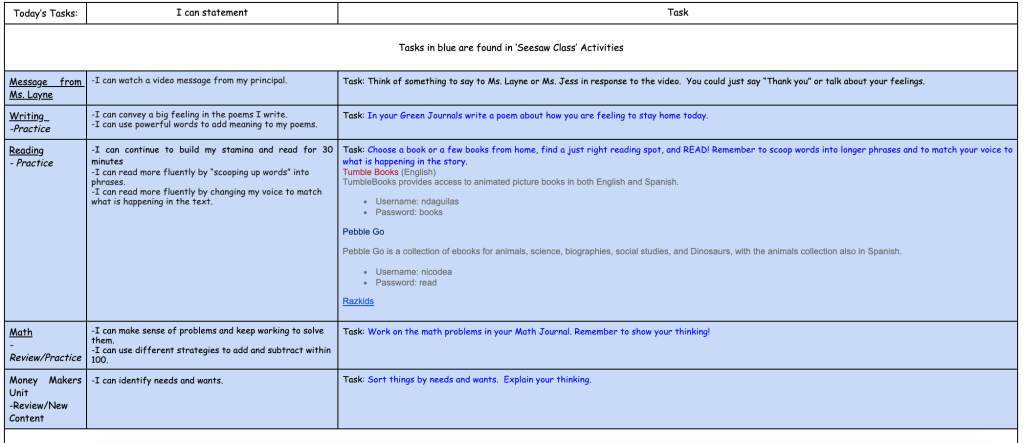
Today, my kids received a welcome to distance learning from their principal made on Screencastify. As a learning coach, I took notes and prepared to open an account, watch an online tutorial on how to make a video on Screencastify, and make my own quick video, too. Then the kids opened an email from their classroom teachers with learning in all of their subjects. All of the platforms including Google Docs, Brain Pop, IXL math, Raz-Kids, and Seesaw they had previously used in school. Both teachers had office hours on Google Hangouts.
When Mia posted her work on Seesaw, she uploaded pictures and voice recordings to explain her math thinking. She shared her poem from her writing journal. We read together Heidi Heckelbeck is Ready to Dance, which is a new series for her. Mia made lunch for her and Max. She loves to watch Masterchef Junior, so she enjoyed making spaghetti, fruit salad, and cut vegetable sticks. Max worked on his own without too much guidance from me for the most part. When he was missing a password or could not get into a Google Hangout, he asked me for assistance. We talked about rising and falling action. He spent a little too long on math problems in IXL far below his level. He also spent time losing in online chess to grandpa. I am noticing that he rushes through his work, which I wonder is because of using online platforms or is something that I have not noticed because I have not been so close to his learning. When Rich came home, both kids went for a long bike ride. We played some Crazy Eights and Monopoly. To be sure the schedule that we had made the night before, we did not follow. However, just having the schedule set a tone for the day that this would be a day of structured learning, outdoor fun, and indoor games.
Mia’s Monday ScheduleExcerpt from Max’s Distance Learning
To be clear, today was not all sunshine and success; nor do I expect the next two weeks to be easy. I was not able to get to any of my own work until 3:00 pm. I am taking a course online for distance learning with Global Online Academy, which I did complete well. I did not get to test a coaching pilot tool for our team that I had promised to finish. I can anticipate that working from home will present some challenges; I am not sure how I will get any sustained work done. Also, for some reason, we did not have a set of keys at home, so the kids and I could not leave the house because the door locks behind us. Even if I propped the door, we need a second key to get into the gated plaza, so we had to wait until Rich came home to go for a scooter ride/run. Overall, the kids spent far too much time staring at screens, so we are going to figure out a better balance.
Tomorrow, we have a lot to look forward to. Thanks to a Facebook friend, I have heard about Lunch Doodles with Mo Willems through the Kennedy Center, which he is offering live weekdays at 1:00 pm EST. Mia and I will continue to practice violin together. We are both learning how to play “Finger March “using the Open D and E on the D string. I will go for another short run and continue to work on upping my pushup count. The kids are reaching out to friends (near and far) to Skype with. I am reading an interesting book called iGen: Why Today’s Super-Connected Kids are Growing-up Less Rebellious, More Tolerant, Less Happy- and Completely Unprepared for Adulthood. I am sure that I will learn new technology platforms, spend quality time with my family, and join more new FB groups like the Accidental Homeschooler one I was just invited to after sharing a link to NPR’s Circle Round online. Looks like some silver lining…
This morning I went to Lider (Owned by Walmart) and bought a standing fan for $7000 pesos, roughly $10. It is nearing the end of the summer; this is an amazing price for a fan, but when I really needed a fan during these past two sweltering months I could not find one for under $40,000 Pesos at Easy, Fallabella, or Lider. I could not justify paying sixty American dollars for a fan, so we moved fans from room to room and borrowed another fan over the vacation, and sweated it out the rest of the time. It has taken seven months, but I am finally starting to understand how to shop in Chile. You need to buy home goods out of season. So, now is the time to buy camping air mattresses, pool accessories, and coolers. The trick is not to buy something when you really want it, but instead to buy things that you will need.
Fruit, however, is the opposite. You can really only buy it in season. When I went to the market this morning I bought watermelon, peaches, and grapes. Though I really wanted cherries, they are gone and blueberries are now twice as much as they were the last two weeks. Imported food or food out of season is really expensive and often unavailable, but I can get an entire watermelon right now for a little over two dollars. At home, I knew where to get the best deals. Here it is about when to get the best deal.
We have been in Chile since July and have been back at school for one, long week. All four of us have had such an easier start to the semester than the first one. When we talk to teachers who have been here for awhile, they nod knowingly that the beginning is incredibly challenging, harder than most international school transitions. We have had a number of aha moments when we realized that we were not alone in thinking how tricky it has been to set up life here. Human resources, while helpful, is more hands off; after-all, Chile is not a third world country, and the expectation is that teachers can negotiate it all on their own. When we were in Brazil, we received a finished apartment. Our bills were paid for by Human Resources. In Chile, we found our own place and houses come without refrigerators, dryers, curtains, and light fixtures. Chilean law regarding notarizing contracts with nannies and landlords is strict. Knowing Spanish is important because otherwise one cannot set up phone lines, internet, doctors’ appointments, and furniture deliveries.
The reminder of how far we have come in our transition seemed the clearest to me by attending a ping-pong tournament on Friday night at the same house where there was a newbie party in July. That July evening I barely noticed the beautiful, mountainous backdrop or the large pool surrounded by various fruit and almond trees. At the first party, though I appreciated the welcome gesture, I did not really enjoy myself. It was cold and dark for most of the party, and aside from shivering in the wrong clothing, I was worried whether the kids would make friends. I spent the night in a number of awkward conversations, though I understand now that the school sponsors this party knowing how hard the beginning is for newbies. This weekend, Rich and I had fun playing ping-pong (neither of us moved on to the 2nd round), and we had genuine conversations with people that we know, rather than making introductions and feeling like we were complaining about our challenges. Max made it to the semi-finals of the kids’ tournament; Mia spent the evening building an outside fort with friends and gathering fruit and nuts for their feast.
The kids are also enjoying not being new faces at school. Mia came back from her camp experience transformed; she seems older and more mature. I am not sure how much is directly tied to being on her own for eight nights at camp or not. At home now, she is able to make pancakes practically on her own, even doubling the recipe. She washes her dishes. She admires a sixth grader named Uma who introduced herself by saying, “I am a positive person” and who wears t-shirts with inspirational messages like, “This girl does not stop.” Don’t get me wrong; Mia still could use a little help. Her suitcase from camp came home with all of the clothing still neatly folded and untouched. She never showered, changed her underwear, or used other socks. She cried at the train station out of joy in seeing us and gave Max the longest and tightest hug I have seen. She was homesick at camp, but after the camp director told her to choose to stop crying and enjoy the experience, she did. Now at school, 6th graders come over and give her huge smiles and shoutouts. They have inside jokes from camp. We are amazed by how many people know her at school.
Similarly, Max seems to have found his groove. He was a football birthday party this morning with his buds and has another laser tag party next weekend. At the ping-pong tournament, he was the kid hanging with the adults in this game called Rondo, which is the ping-pong version of knockout. He has adults at the school that he discusses American sports with regularly. Though he still plays online chess with grandpa and Skypes with his best buds Sam and Landon from home, he is also getting super excited to host his uncles, grandparents, and friends when they visit us in Chile. The Tingers will be joining us here in a few short weeks. Lucky for them, we are no longer rookie hosts either. We are planning on showing them a great time! I found myself saying to Mia the other day, “How did you help the three new girls in your class today? Remember, you know what it feels like to be new.” She nodded wisely and gave me an example of how she was kind. I smiled and realized that in a few short months we will become “Twobies”- which means in our second year. Phew….that sounds much easier.
“Hey,” Max said as he put his hand on Mia’s shoulder. Max was saying goodbye to his sister, who was leaving us for eight nights to attend an overnight camp about six hours south of Santiago. Mia looked at Max for more information. The line, he explained, is from Spiderman Into the Spider-Verse in a scene where Miles’ uncle, Aaron, is trying to teach Miles how to show that he has feelings for a girl. “Give her a hug, bud, and tell her you love her,” I said to Max. “You are not going to see her for eight days.” Actually, it was me that needed to hug my daughter tight and tell her that I loved her.
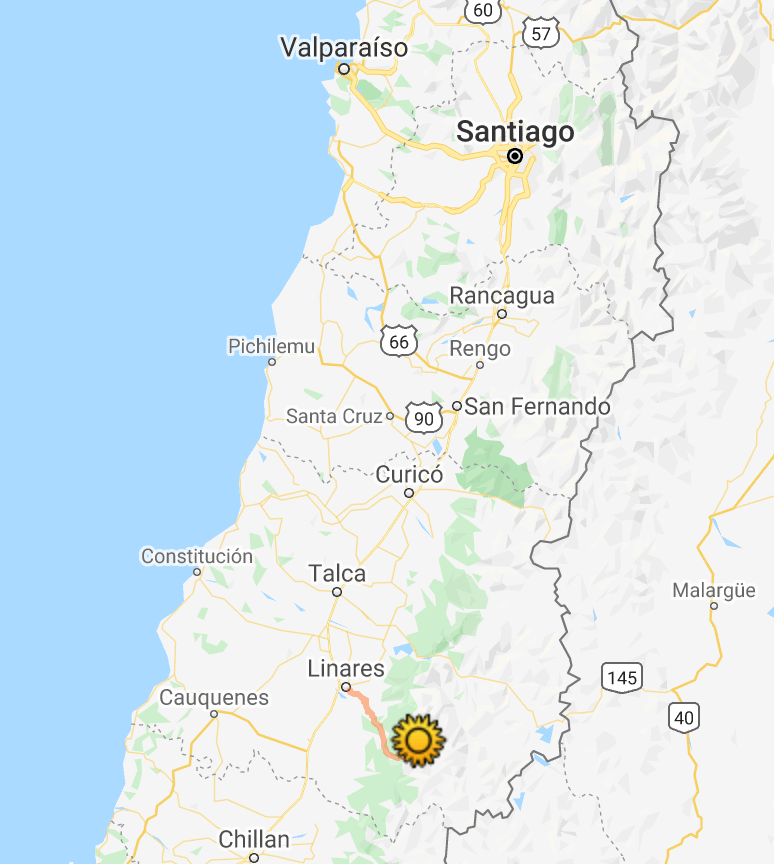
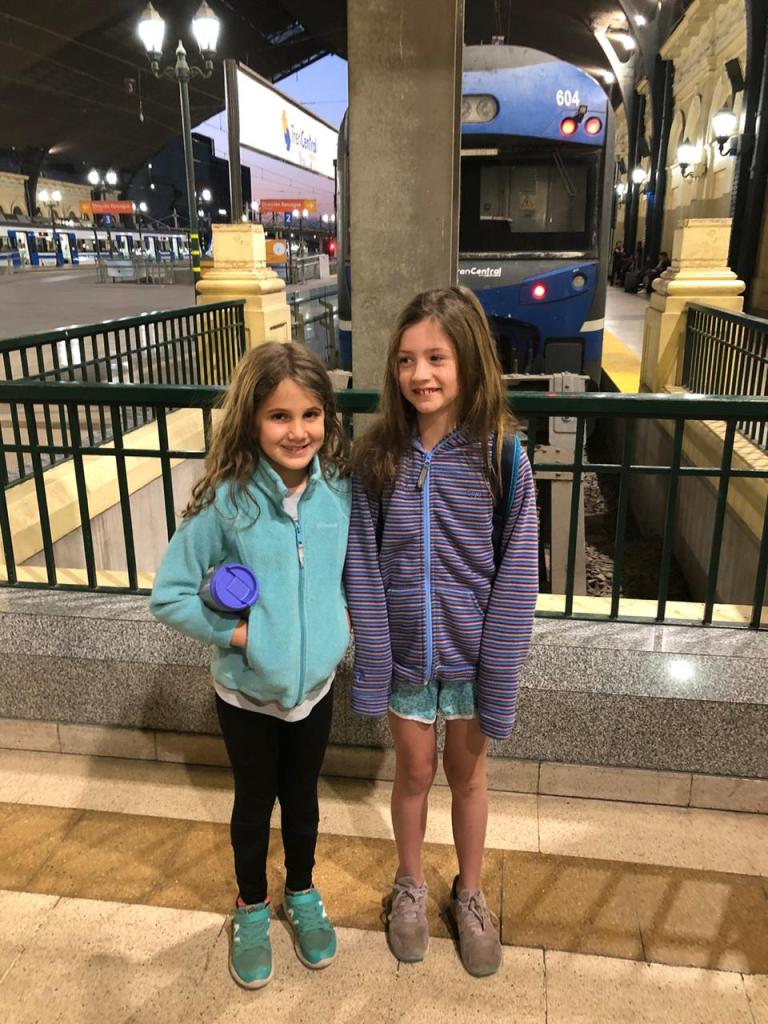
My daughter is fearless. She does not get that from me. We dropped her off at the Estacion Central to catch a 7:25 am train this morning with 38 other kids ranging from 6-14. She never teared up. After her four hour train ride, she had an hour van ride followed by a 40 minute hike. Kids from our school love this overnight camp, and Mia begged to go despite all of my best attempts to dissuade her. “It will be dark at night,” I told her. “I bet they won’t let you sleep with the light on. You can’t call us,” I continued. “There is no cell service. They are not going to floss your teeth or put on your sunscreen. What will you do if you don’t like the food?” And still Mia held on. I paid the deposit but waited way past the due date to pay the final balance. A week before the camp, I asked if she was absolutely sure and then transferred the final payment.
It is a very surreal experience to watch your eight-year old get on a train and pull out of the station. She will visit a place I will never see in the Andes. She will have eight days of adventures with people I do not know but somehow have trusted to take care of my most treasured angel. Some parents cheered. One parent was crying. Parents from the school, including close friends of ours, claim that their kids say this camp is the best experience of their lives. I am not sure how Mia will do once she is there. I wrote her eight letters, one for each day. I reminded her about applying sunscreen, brushing her teeth, and getting enough sleep. I warned her about the dangers of the river, horse-backing riding, and evening camp fires. I told her if anything made her feel uncomfortable that she should tell a counselor.
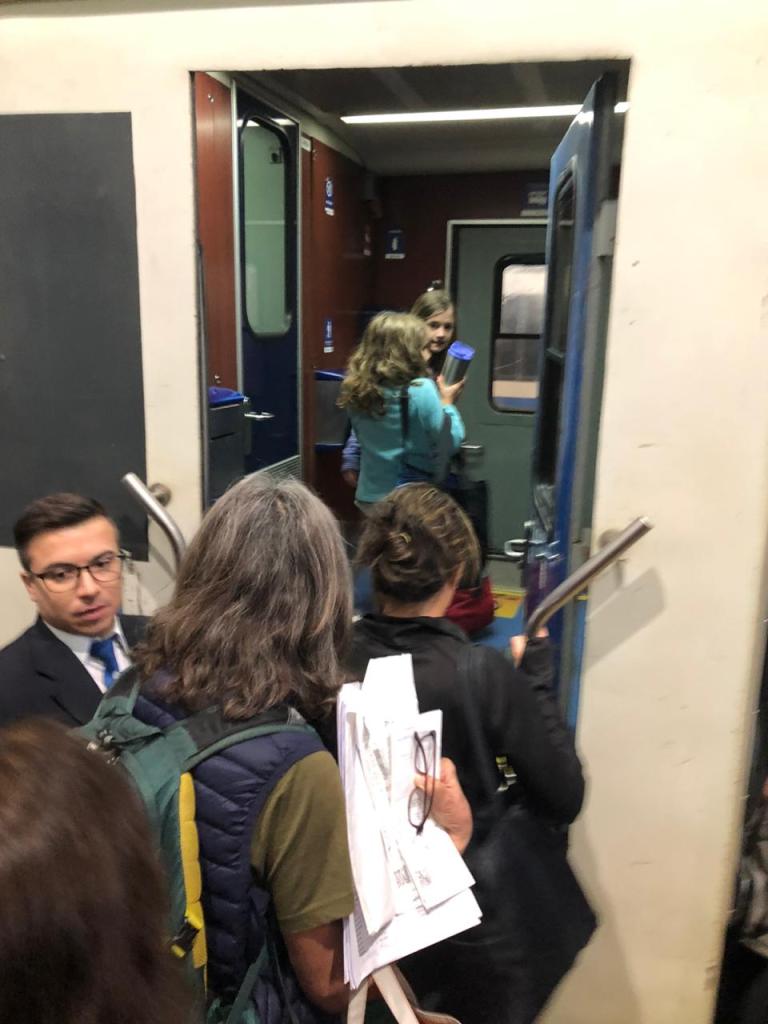
Kelly snapped this picture of me getting on the train. The camp director is right behind me.
“I cannot believe you got on that train with them,” my friend Kelly said. “I thought you were just going to help them with their suitcases on the platform, but then I see you getting them in their seats.” Well, I just wanted to be sure that the girls would be able to sit together, and maybe I was hoping for a sign to pull Mia off.
However, the counselors actually genuinely made the most perfect comments. “I went to this camp when I was six,” Tito a charming counselor shared. “I loved it so much I had to come back as a counselor.” What do you do when you arrive at camp I asked him. “Well, the first day we introduce the kids to the river. It is awesome,” he gushed to Mia and her friend, Veda. “And totally safe,” he said eyeing me with a wholesome smile.
The director has texted to say that the train arrived and that the kids arrived safely to the trail head. After that, her very clear message is that “No news is good news.” I did write her back the following text: “Great. Thanks for the update. I hope everyone is well. Please remind Mia about sunscreen this week. Have a great time. She is so excited!” I realize that this comes across as a bit “helicoptery”, but I cannot help it.
I am not sure how I will get through these eight days. Mia comes home fittingly on Valentine’s Day. I will love that girl to pieces when she gets home. I have already made us a nails appointment. I hope that she approaches every challenge in the future with this same bold, brave enthusiasm. This morning at 5:30 am when Rich woke her up and said, “Good morning, camper.” She had a huge smile on her face. She had gone to bed dressed and was ready to go. I hope she is still wearing that smile.
Yesterday was a rather disembodied experience in the best possible way. My body was scanned, pricked, and examined. Usually, when I go to the doctor’s office, I have just one appointment, one doctor, one waiting room, and one time to disrobe. In Chile, there is something called a yearly, which means that you can get every personally appropriate test and doctor’s visit done in one all day marathon. I had the appointments and payment ($0) all arranged. Cigna covers the entire bill, and I received my guaranty of payment well in advance. One week after the exams, I will return to my primary care doctor, which I will also seen on this date to discuss the results holistically, that is in terms of my overall wellness with all of the pertinent and timely data. By the time it was 2:30 pm, I had been in six blue disposable body gowns and seen five doctors.
In order to set up the day, I made a single email request in English with International Patient services at Clinica Alemana, a hospital about 10 minutes away. I showed up at 8:10 am to find Gustavo holding a large red-leather binder with my name on it. He opened it and showed me my schedule for the day. Based on my age, gender, and concerns my appointments had been all pre-arranged. First, he sent me to the lab for blood work. I told him that I also wanted to add a test for thyroid levels, and he obliged. Then, I returned to him, and he sent me off to mammography. I had a regular mammogram and then an ultrasound type mammogram. The doctor performed the ultrasound and told me immediately that I had nothing to be concerned about. Afterwards, Gustavo sent me to get a scan of my internal organs. After the technician performed the next ultrasound, a doctor read the results going back over my liver and gall bladder, which I can only assume may have been hard to see or had potential issues. She confirmed that my internal organs were normal. Then, I saw my primary care physician. She took a full history. When I shared with her a problem I have been having for years with my lower back and abdomen, she made a recommendation to see another specialist. She told me not to give up about resolving this issue. I have never had success solving this problem for years because I stop searching for answers after a few costly exams that basically rule out appendicitis and tumors. The problem persists and no one seems to believe that such a chronic pain could be that serious. My new physician had Gustavo schedule an appointment for the next day. She had already seen the results of several other tests that I had previously done, including a colonoscopy at a different facility in front of her, to guide her decision. I then had an echocardiogram, pap smear, and full body scan by a dermatologist. Most of the exams were in Spanish, though if the doctor could speak English, he/she tried. My primary care doctor speaks English. I did leave one appointment with a prescription that I had to ask another physician what exactly it was for.
Before leaving the hospital, Gustavo asked me if I needed my parking validated. At the information desk, the woman helped me to set up my online account (mi pagina de salud), so that I can see all of my past and future appointments, tests, images, and results. I had some time to check out this page. It includes images, notes from the doctors, pathology reports, and blood work.
This could not have been more efficient or made more sense to me. I know exactly when and how I will get all of my results. My health care will be managed cohesively by one doctor based on all of this information taken together. What is so difficult about getting this kind of top level of care and service in the United States? What are the critical differences? I have never had a conversation with my primary care physician about all of my combined tests and exams until this visit. I have never had all of my costs entirely covered. Thus, when a physician recommended a test I never had to think about whether I should have it or not due to cost. There will be no further co-pays. All payment is due in full or guaranteed in full by the insurance provider at the time of service. How efficient for the hospital, too. Next year around the same time, I will set up the same yearly exam and have tests to make comparisons. I will not have to stagger the appointments based on last year’s appointments and availability. I have never had every test and physician under the same roof. The kids’ pediatrician is in the adjacent building. Alemana Sport (the orthopedist) is also next door. Is this the experience of all Chileans? Most definitely not, but the model exists, and it works.
My parents were our first visitors to Chile. Their trip taught us some important lessons for future guests. I wish that we had some one else to practice on before their trip, but I think they were good sports about being our guinea pigs. Hopefully, they will be back again. I will get good at this hosting thing. It was so deeply satisfying to be with family and to share with them all aspects of our life from our school to favorite parks and hikes. There were some hairy moments in these last eight days, for example, when I was following Rich in our car rental out of a parking garage below El Cerro Santa Lucia in our own car and had to stop right at the point of the steepest incline right before a busy intersection. As I have been been driving stick for just a few short months, I turned to my father and said the following words that no visitor wants to hear: “I cannot do this.” Somehow I ultimately managed to peel out of the situation using the parking brake without rolling back down the entire hill or lurching forward into our own vehicle- crisis averted.
Overall, there were some moments when I had wished I ordered differently at a restaurant or timed a different activity. It was quite hot in Chile this past week, and climbing to the top of the second cascada (waterfall) in the Andes at noon in order to time horseback riding for the kids and a return to Santiago that avoided rush hour traffic is a little much for any traveler. It is always tricky to plan an inter-generational vacation, but I think the combination of outdoor activities, wineries, and cultural sites are fun for all. We would have liked to do more in Santiago, such as art museums or the Paulo Neruda house, but there were so many options and everyone’s interests to satisfy.
For the future, here are my top four recommendations rather than my top ten because as Ellen says in her best four moments of the decade, I am going to skip the first six that people are like “Oh, yeah” and just get to the four. First, it is fine to use a Chilean car rental company (they are much cheaper than Avis and budget) but I will always pay for the premium car insurance when I rent a car in Santiago. Although the number of exclusions are lengthy, we still guessed correctly that it might be worth it. This was before we backed up over a rock in a driveway of our accommodations in the Andes and damaged the undercarriage. The insurance we purchased had zero deductible. Though the fine print in the contract said that we would be responsible for damage to the plastic, the company was willing to cover the entire damage. I will hold my breath until all the charges come through, but the car attendant was very surprised that we had purchased the highest form of car insurance. In Chile, car insurance is tied to the automobile, not the driver, so our personal auto insurance would not have covered anything.
Second, keep the daily itinerary simple. We ran into a fellow teacher from the school at Mallsport. Her parents spend a month with her family every year, and they were there, too, with their grand-daughter. They told us that they commit to one activity a day. By the time we had arrived at Mallsport, we had already had a Thai massage and visited Bicentenario Park in Vitacura. It was our third activity of the day; they were a little shocked by our ambitious itinerary. By the end of wall climbing, air-traling, zip-lining and ice cream, we were all beat. We tried to pack our days, but in the end, our guests also liked chillin’ at home and going out for one excursion.
Third, I would always recommend a Thai massage to every guest. We have a fabulous massage parlor (Ananta) in our neighborhood. After my first massage, which was a Christmas present, I promptly bought a pack of ten more. After my mother’s first Thai blend, she scheduled a hot oil massage for the day of her return home. She loved it, too, and told me that she would get one every week if she lived here.
Our biggest aggravations was that there is a 18% tax for Chileans (us apparently) at all hotels. When I reserved the hotels on booking.com, I gave my name/information even though I said that I was booking for someone else (foreigners). We had to pay the tax because I made the booking. To avoid this costly tax, I will book directly with the hotel, so we can make adjustments or have a foreigner make the booking at the start. Or I would use our foreign guests’ information and credit cards.
Finally, leave a lot of time at the Santiago airport. It took my parents nearly 2.5 hours to drop off their bags, go through security, and walk to their gate. Though they had uneventful flights with no delays or cancellations, I was glad that we did not count on their arriving or leaving on time.
It was so wonderful to share with my parents our new lives. I realized how much we have learned and have had to negotiate. I appreciate where we live in an entirely new way. And, although my Spanish is basic, I was able to translate the gist of conversations between our hosts and my parents, schedule activities, and convey information whenever we needed. I now feel motivated to work even more on my Spanish. Though I know that my parents are thrilled to be home, having left Santiago Santa Cruz and Cascada de Animas, for the first time it felt wonderful for us to be returning to our home, too.
So yesterday I went to a gynecologist in Santiago. In order to schedule the appointment at a first-rate hospital, I emailed International Patient Services (IPS), who have an office in the hospital Clinica Alemana, where most of the specialist offices are located. I scheduled three different doctor’s appointments, and IPS took care of the guarantee of payment (insurance payment) on my behalf. All of the physicians I will see speak fluent English. When I arrived at my first appointment yesterday, I checked in using my RUT (national identity card number) at a machine. I was called to a desk in deli like fashion; she confirmed full guarantee of payment. In three minutes, my name was called, and I walked into office eight, where the doctor was sitting there waiting for me at his desk. I did not need to talk to a nurse or wait naked waist down for a physician. We talked for five minutes, and then I had the exam. He was able to use the ultrasound machine because it was in the room. We conferred afterwards, and he wrote me an “orden” there. I left the hospital, thirty minutes after arriving, having paid in full (absolutely nothing) because my Cigna health insurance will cover it all. I have never had a doctor’s visit in the United States in which I was seen so quickly and with the test that I needed on the sport. Can you imagine knowing the cost of your procedure will always be covered in full (if it is a doctor’s orden) and having it paid before you leave?
This past month we have had a CT scan, colonoscopy, ER visit, and kids’ yearly check-ups, all with the same result- a zero balance. The one time that I went for a CT scan, they initially could not find the “orden”, and because it was after 5:00 pm, they could not call International Patient services. I was told that to have the exam, I would need to pay in full but would then be reimbursed in full. I was notified of the entire cost of the procedure. I declined the procedure. However, in the end, another administrator was able to track down my guarantee of payment, so I had the service and paid nothing. The procedure would have cost me a few hundred dollars. Many expats do pay for the procedures out of pocket intentionally using a credit card with points and then get reimbursed by Cigna. The reimbursement is so quick (a few days), and they want the credit card points.
Rich claims that we have exceptional health care here, which most Chileans do not. That may be true, but the cost of healthcare is also reasonable and transparent. There was a sign in the ER of what payment would be (around $100 American). You cannot see a doctor without a conversation about the cost and confirmation of a payment plan. There are no surprises.
In contrast, this morning Rich was on the phone paying for the third bill for a small lump on the back of his head that he removed last June in Beverly, MA. We had already paid two bills for this procedure. Furthermore, our insurance had initially rejected the entire claim because of a coding misunderstanding. The insurance did not want to pay for a procedure that they felt should have been done in a hospital rather than in the medical office. Coding is a big thing in the United States. For example, Rich’s colonoscopy was not covered because it was preventative rather than diagnostic. They did not remove any polyps on this visit; therefore, we were on the hook for a few thousand dollars. If they had found an issue (as they had previously), then we would not have to pay, even though colon cancer runs in his family and this was a doctor recommended procedure given the polyps previously. There is no way that a doctor’s office in the US could ever assure me of the cost of any appointment or procedure because they really have no idea what our insurance (Tufts- the worst!) will cover and refuse to pay. The bills we used to receive made my head spin, intentionally I am sure, because of the complicated family and individual deductibles to factor in; our school covered the first $1500, but our yearly deductible was $2500 so then we covered the next $1000. Not all services go towards your deductible, and you can only find out your remaining deductible by calling your insurer. Furthermore, a different company would send us checks for random amounts that could be paired with dates of service to cover the difference between our portion of the deductible and the schools’. Sometimes, we received multiple bills for the same service, months later, but it could include separate billing for lab-work, anesthesia, and doctor services. Sometimes, we would receive an outrageous bill and our doctors’ offices might call on our behalf to find out the “right code” to resubmit the claim.
As a result, I rarely went to the doctor in the States beyond the recommended preventive appointments. I tried to use the minute clinic as much as possible with the kids. I thought about the deductible. If we were already over the deductible, then I would take them to our pediatrician. During consultations with my own physician, I refused her advice to get an MRI and a CT scan because it would have been too personally costly. I did not go to the ER on one occasion that I thought I might have an appendicitis because it probably was not the cause of my lower abdominal pain. That is insane. Our healthcare was incredibly costly in the States, and we both had excellent jobs. One of my major concerns in returning to the United States will be how to pay for and the quality of my family’s healthcare. I guess until then I am going to be emailing International Patient Services quite a bit. That reminds me, I should get my skin checked, the kids’ vaccines updated, orthodontic work for both kids, and perhaps all of our eyes checked, too.
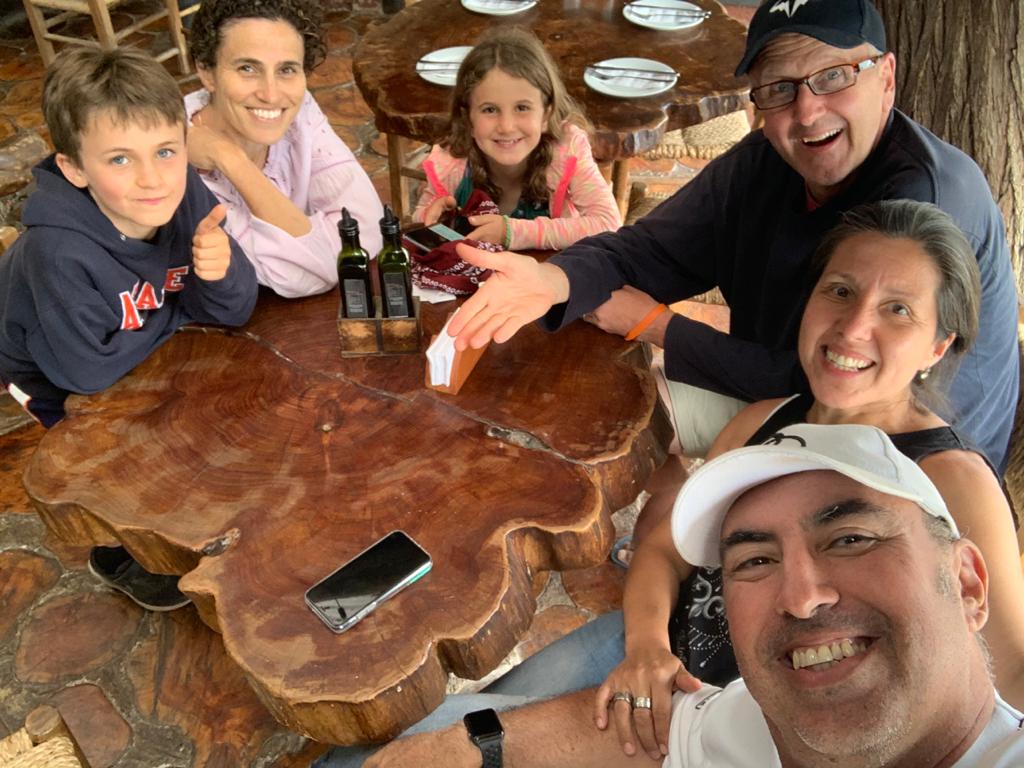
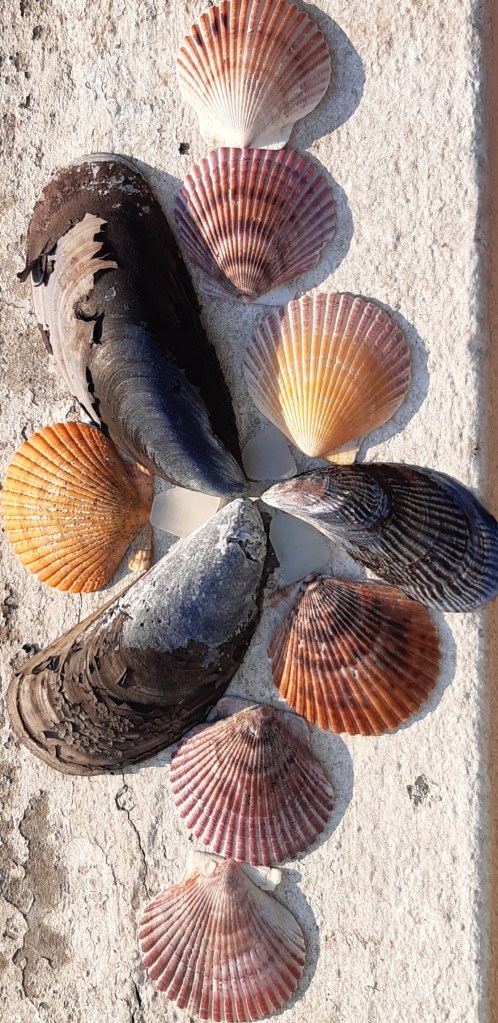
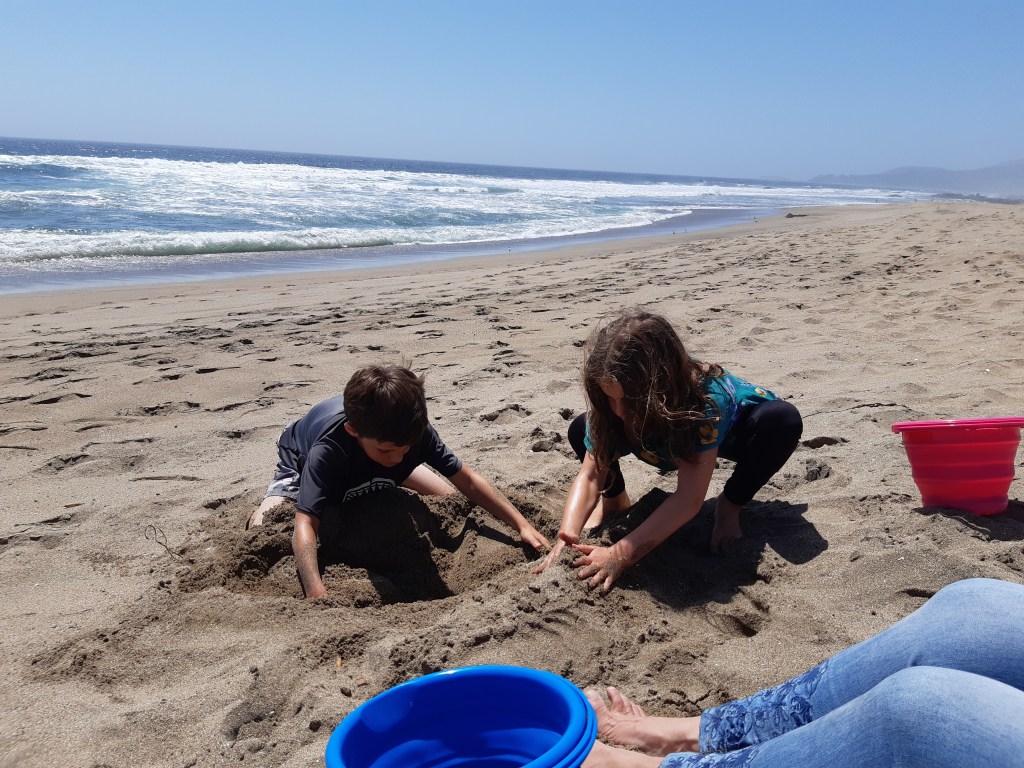
We arrived home this afternoon after spending the last four nights in Maitencillo. This was the first Christmas holiday in twelve years that we have not spent our break in Canada with Rich’s family (either in Toronto or Banff). Instead, we drove two hours to the North with our Chilean friends, Vicky and Joc. We stayed in Marbella, which is a coastal community, less than an hour away from Valparaiso and Vina del Mar. We spent our days playing tennis, finding unusual shells on different beaches, and swimming in the pool. The weather was idyllic. While it was over 100 degrees in Santiago, it was sunny but cool on the coast. Joc suffered a painful sunburn, but I lathered 50+ sunscreen on all of us, and we managed to avoid burning.
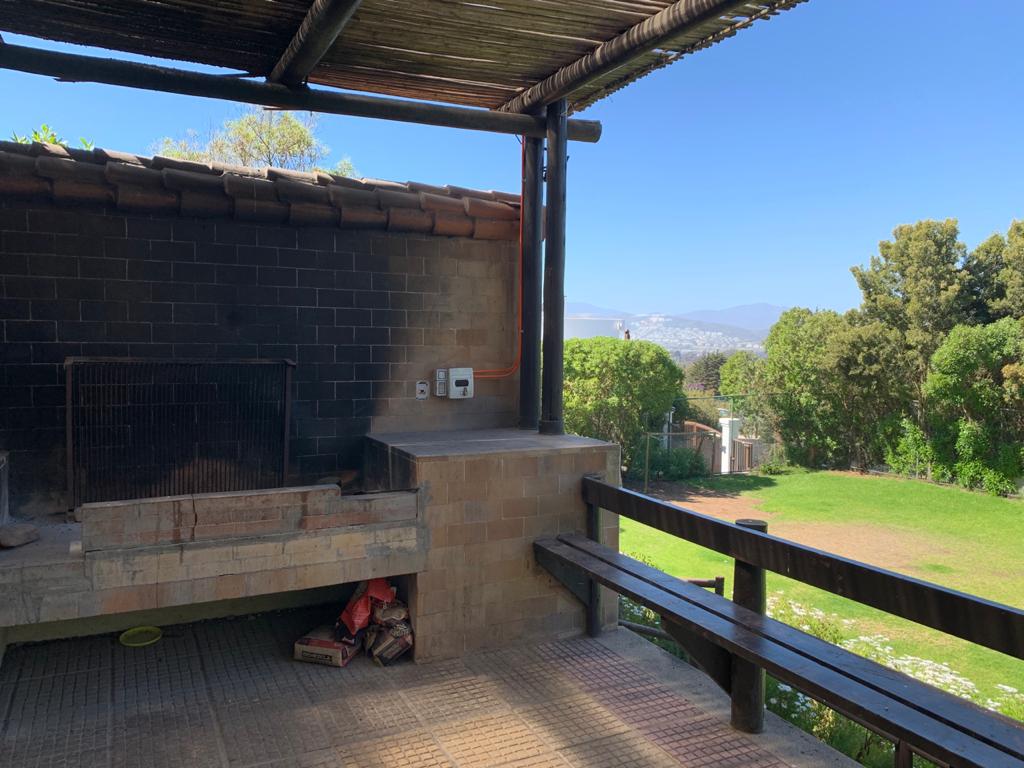
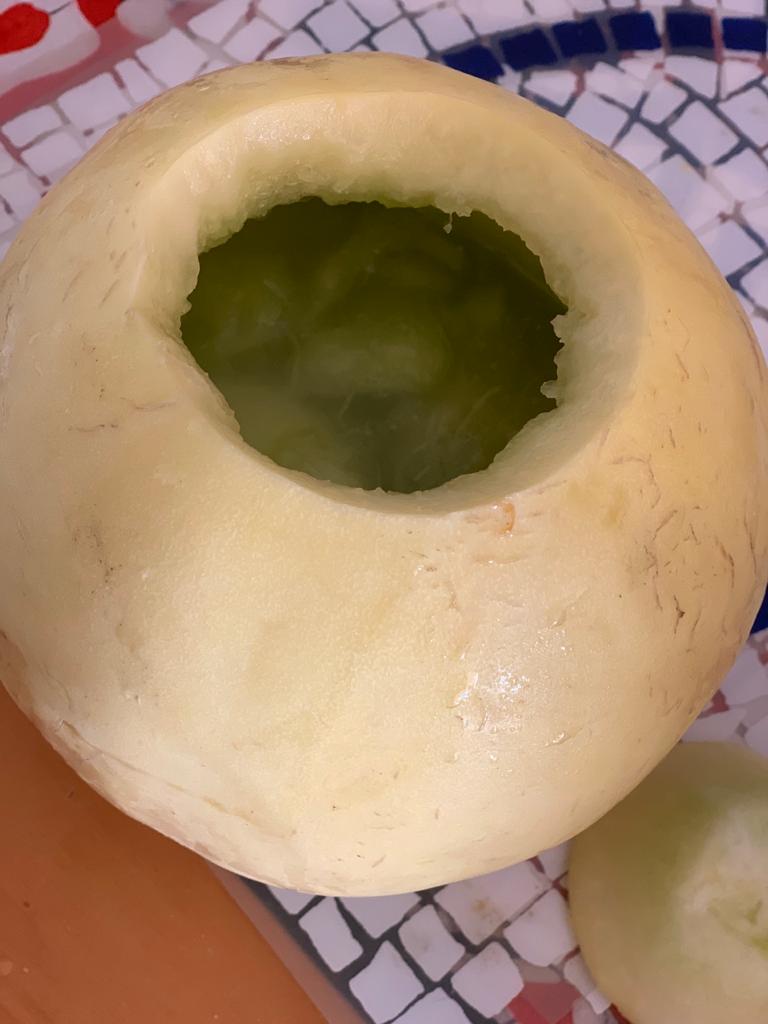
There were a few stark differences from our previous Christmas celebrations. Our Chilean friends eat their big meal of the day at lunch. So, each day we had a large lunch around 2:00 pm in the town of Maitencillo after working up an appetite playing tennis. The Blue Unicorn was our favorite restaurant. We ate a lot of muscles, oysters, clams, shrimp, and crab that all involved a lot of lemon and palta (avocado). We usually strolled along the beach and then enjoyed some ice cream. For dinner, our hosts served watermelon, cocktails, and snacks like peanuts; though when I made the kids capellini and meat sauce, Joc indulged, too. Rather than drinking Aquavit with our Canadian (Danish) relatives, we enjoyed our share of pisco sours with pico, which are juicier lemons. Our hosts made white wine in a honey dew melon. First, you drink the honey dew flavored wine from the melon, then you eat the wine soaked melon inside. For Christmas dinner, rather than eating a large turkey dinner, we reserved the bbq area and prepared lomo salteado, or salted grilled pork loin, on the grill.
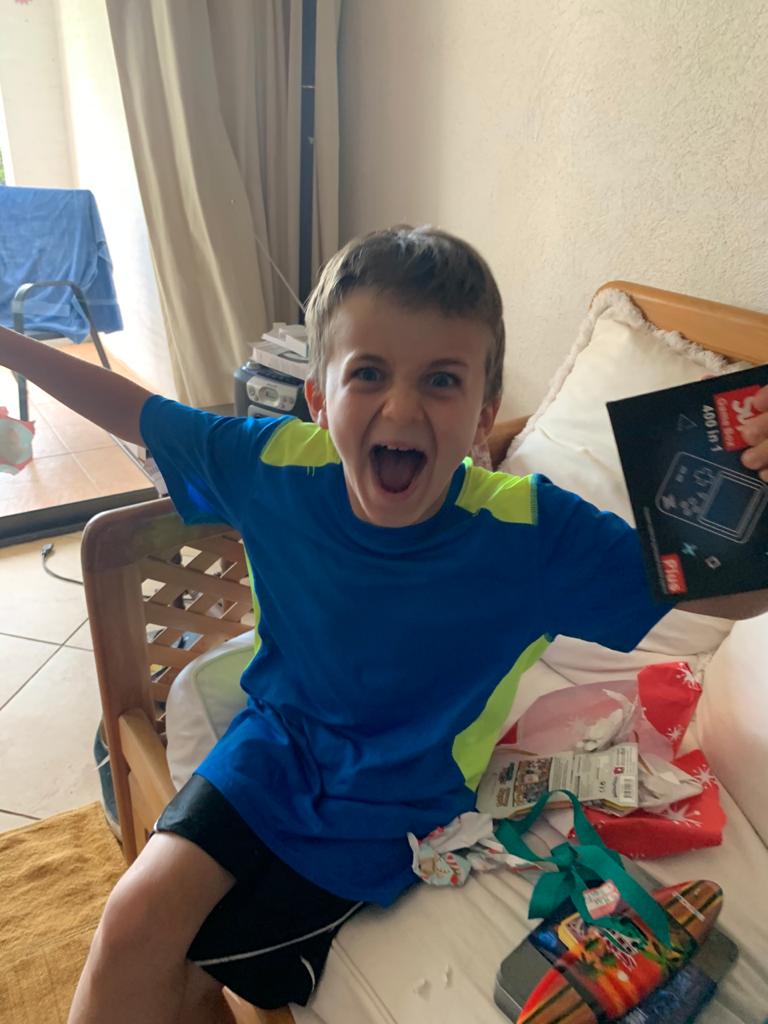
Chileans open presents on Christmas Eve at midnight. We did not stay up that late, so ended up with a compromise by opening one present on Christmas Eve and the others on Christmas morning. As per usual, the kids spent Christmas day playing with their gifts. Although the holiday was modest, as always there were more gifts than I anticipated. Mia’s favorite gifts? A sewing machine we left in Santiago and a bracelet making kit. Max’s favorite gifts? A fit bit and 40+ video game player on a hand held device. Everything was closed on Christmas Eve after 2:00 pm and then opened again on Christmas day. However, Chileans have not started their holidays. They will be heading in droves to the beach after New Years, so we enjoyed the beach without any crowds. On the way home to Santiago, we drove along the coast stopping at Concon for lunch and Vinas for ice cream before finally arriving home to Spotty, our cat, waiting for us and Dominga, our neighbor asking if Mia could come out to play.
For the first time coming home to Santiago felt incredible. Though vacations can be dreamy, there is nothing like sleeping in your own bed, watching Elf on your own bean bag chair, and eating dinner at home. What a difference from our return from Regina after the Dieciocho holiday in September. Of course, it was winter in Chile then, and we had just arrived to Chile in July. It helps that it is summer in Santiago now, and we have furnished our house more comfortably since then. Also, we have six more weeks of summer holiday to savor. Our nanny cleaned our house for our arrival, and we had Christmas lomo (pork loin) in our cooler all ready to have as sandwiches for dinner. Rather than doing everything together, as we had for the last few days, we each retreated to our own activities of listening to NPR while playing online chess, jogging, organizing shells from Maitencillo, and analyzing our Fitbit statistics. You can guess who enjoyed which activity. Ah, hogar dulce hogar! (Home sweet home)
This weekend it occurred to me how much our life here is removed from what we would be doing a few short months ago. Basically, I am living Sliding Doors, when Gweneth Paltrow’s life splits into two parallel universes, based on two possible paths her life could take depending on whether she catches a London Underground train or not. Just as easily, our lives in Ipswich could have taken an entirely different path.
On Thursday evening our nanny stayed an extra hour, so Rich and I could go to an end of year party at our principal’s house. Though, we attended end of year Christmas parties at home, this one was on a deck of a house built into a mountain. I was initially jealous of their gorgeous poolside views and panoramic windows overlooking the hills, but I think the prospect of carrying groceries up that steep climb might outweigh any scenic vista.
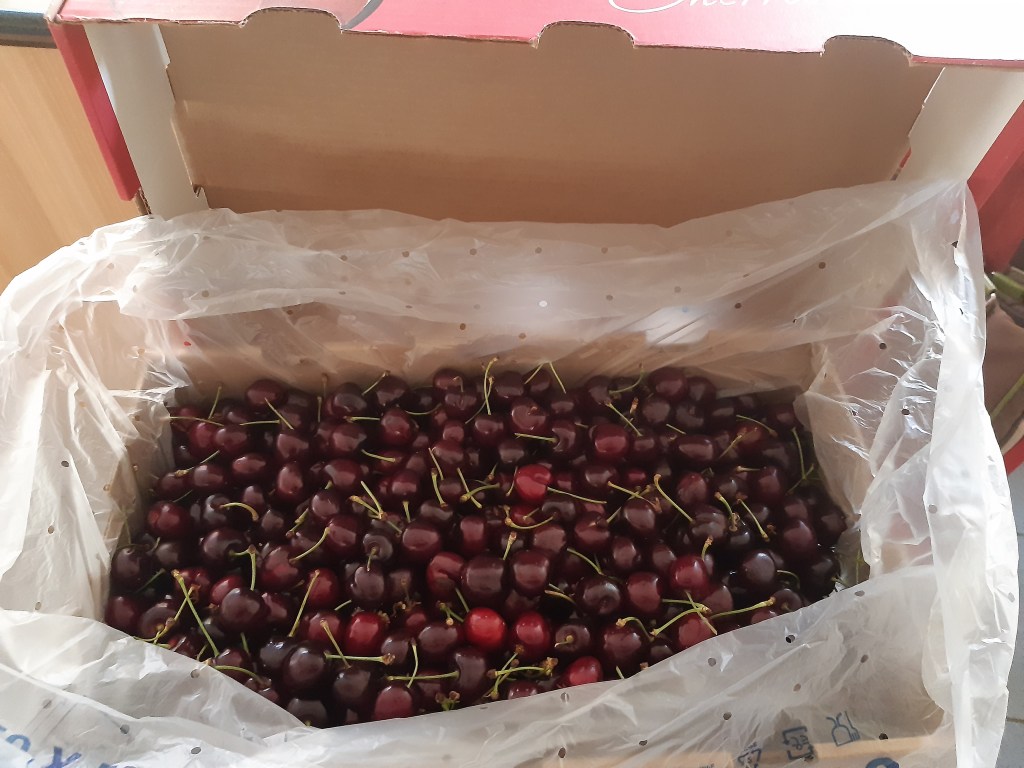
On the way home, I stopped at the side of the road and bought a 5 kg of box of cherries for about $12. I have to remind myself that I will get sick if I eat them all too fast.
5 Kg of Cherries
Friday morning I shoveled a dead bird off my porch. It made me realize that the only thing I would be doing with a shovel this entire year is moving our cat’s trophies off our front step. I am not missing the winters of the Northeast at all.
We went to a yard sale on Saturday at our school and bought some English books and another scooter, as it appears you can never have too many Razor scooters. It occured to me that nothing (including this large outdoor yard sale) for three quarters of the year has a rain date because it will no doubt be warm and sunny.
Later that afternoon we went to an open mic night at a colleague’s house near Santuario De La Naturaleza El Arrayán. It felt like the whole school had turned out for the event; remarkably there were no poor acts. It is amazing how many talented musicians work at a single school. Perhaps, the risk of singing in front of a large audience is comparable in some way to the risk of moving overseas.
And the craziest occurrence of the night happened while Rich was unpacking the amp out of his car. A man greeted me at the gate with a hug “It is so good to see you.” He seemed vaguely familiar especially around his eyes, but he did not say his name nor seem to remember mine. It was only after Rich and this man were playing together onstage that Rich realized that this was Gary Blanton- a friend of ours from Graded School in Brazil. We had not seen each other in 14 years. Out of context, none of us recognized each other right away. However, it took us no time at all to reminisce about soccer games, our beach house in Cambury, and some wild nights in Sao Paulo. By the end of the night, Rich was rocking out to Prince’s Kiss while Gary and I were jumping around singing the lyrics at the front of the stage. Our kids were lying in a heap ready for bed, the first I had really seen them for a sustained time all party. They had been running around the river, playing tag and hide and seek. Later in the car, Max admitted that his friends had gone mountain climbing up the craggy ridge across the street; he knew that I would not like that so he had declined. Mia chimed in that a parent had apparently told the group of kids that rock dodge ball was out. Though admiring the musical prowess of my husband happens at home too, both my free range parenting and meeting a former friend from a lifetime ago are strikingly unique to living here.
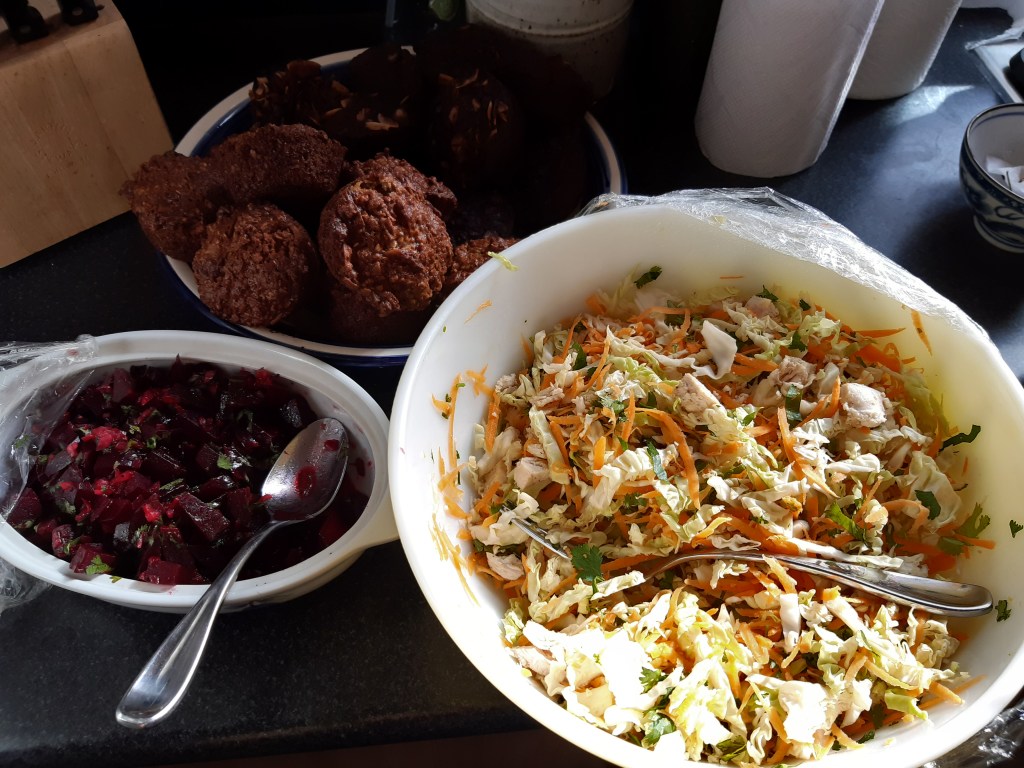
We slept in late on Sunday morning, and I had to hurry getting dressed after the gate bell rang. Our cook, Maria, was early and her usual delighted self happy poised to make us pumpkin muffins (gluten free), chocolate coconut muffins, Vietnamese chicken/cabbage salad, carrot soup, Spanish tortilla, quinoa salad, fresh pasta sauce, and beet salad on Sunday morning. Do not question how all of those things go together, but I have a refrigerator filled with yumminess. I am so glad to have her help. It is so important to me that we eat well, but I cannot seem to make nutritious meals every night during our busy weeks. It looks like we will not have pancakes for dinner this week at all; brinner (breakfast for dinner) has always been a staple. Though I miss Brookwood lunches, nothing compares to delivery subscription. When I ran out of eggs today, there is an easy fix. Cornershop it! You can have anything delivered in Chile.
Sunday late morning I had a semi-final softball game against a team of lawyers. Of course, the name of their team is Buck Yeah! I got my wish as I was sort of hoping to lose because the winners had to play the final in the next game today. You might think that I have become soft in Latin America, but last week our captain broke his collarbone diving for a fly ball in left field. In both Ipswich and Santiago, regardless of how competitive I am, I do not have time for this kind of injury.
Rather than spending the whole day playing softball, Mia and I went for a hike in the foothills of the Andes. As per usual Sunday, Max and Rich watched some Patriot football.
This week I will be co-facilitating a middle school humanities pullout day. Hopefully we will develop the scope and sequence of grade 6-8 topics, broad concepts, case studies, and s.s. concepts. Teachers will also have the opportunity to brainstorm the possibilities for literacy learning. On Wednesday, I am wrapping up a coaching cycle with an 11-12 grade applied science teacher. I have a final meeting with my Freshmen seminar team regarding next steps to plan stage one of UBD for their unit on nutrition. I have a meeting with a high-school fellow to discuss her final exams with her IB seniors for Mandarin. This semester it is a dream that I do not have to worry about grading papers, writing comments, or planning English classes.
Best of all, in four days we will begin our summer holidays. We have over 50 days off starting Thursday. We leave Saturday for a Christmas on the beach, which actually could happen in Ipswich, and the water temps are probably comparable. But we have 50 days off, wahoot! Happy Holidays, everybody. May 2020 find you meeting friends in surprising places, eating delicious food, and keeping your collarbone intact. I suppose this could happen in Ipswich, too.
We have two weeks more until we have fifty two days off. The kids in our neighborhood already are on summer vacation. In February, when they go back to school the Chileans will move into the next grade. Because our students at Nido are going to colleges outside of Chile, and we are in the International Baccalaureate program, we follow a North American calendar. When we get back from break, we will still have half of the year to finish.
It is December and eighty degrees and sunny (every single day), which hardly resembles the holiday season in Ipswich. There are no Christmas lights twinkling in the dark. It actually is not really dark until after 9:30 pm. The vernal equinox is not until mid-December, so our days are still getting longer. And outdoor holiday decorations are not really a thing. Christmas music is not playing on the radio or in department stores. I have not seen a mall Santa Claus. Of course, there are no real Christmas trees. There is no snow, real or otherwise. I see plenty of artificial trees for sale on the Discover Chile: English Speaking Moms Facebook page, and I am sure that most expat families probably have one, but I feel no pressure to buy one and all new decorations. I have done no holiday shopping and will not be sending any holiday cards. I feel zero pressure to do elf on the shelf this year. I cannot find our Menorah, which means it is probably in storage. So, I do not need to buy 16 little presents and chase down Chanukah candles and dreidels, though I will miss lighting the candles, our annual Chanukah party with the Lencis, and my mom’s potato latkes.
We are planning on going to the beach for Christmas this year with friends. We will buy the kids some presents, mostly experiences. Max also wants a Fitbit, and I know that Mia would love a sewing machine, but the celebration will be modest. Though holiday traditions and celebrations are incredibly magical, I feel nothing but relief that I do not have to engage in the madness (just) this year. I am sure when the kids are older that they will not remember the year that we did not celebrate the holiday in a traditional way.
I also had a colonoscopy the day before Thanksgiving this year, so we did not celebrate the holidays at all. If I cannot see my parents, brother, and his family for Thanksgiving, then this year I would just assume not celebrate the holiday. My mom makes the most incredible Thanksgiving dinner spread, and there is no way that I felt like trying to make an inferior version of it. Instead, we enjoyed bbq’ing hamburgers and chicken Friday night on our patio, complete with pisco sours and ice cream. And I also have a clean bill of health.
What are we planning for the vacation? We are looking forward to hosting my parents, and then Uncle Jimmie and Tamara. We will take them to our favorite spots in Lo Barnechea: horseback riding, hiking, and sight-seeing. We have lots of sights in the city to share such as Barrio Italia, one of Paulo Neruda’s house, Los Dominicos, and Cerro San Cristobal. We will take them to half day trips to a winery and artisan towns like Pomaire. We are planning short overnight excursions to Santa Cruz, Pichelemu, and Cascada de Las Animas. We cannot wait to share our new city with our family; it will feel like the holiday when they are here.
This is the first Christmas that we will not be in either Toronto or Calgary since Rich and I have been together. Though driving to Toronto for the holidays was never easy (especially with little ones), I will miss Doug’s delicious turkey Christmas dinner, Danish Aquavit, and Christmas karaoke. This year, I will especially miss Don and Joyce Lehrer, my mother-and father-in-law, who brought all of the family together every year. It is because of them that I have a relationship with all of Rich’s extended family, that the kids love their first cousins, and that I feel a deep bond with Rich’s brothers and their partners, Tamara and Rob. It feels hard to try to recreate Christmas this year, so I am glad that it will just be a different experience, far from the commercial hoopla and also the intimate moments amid a room full of family. And who knows? Perhaps, we will establish some new holiday traditions this year, not the colonoscopy of course.
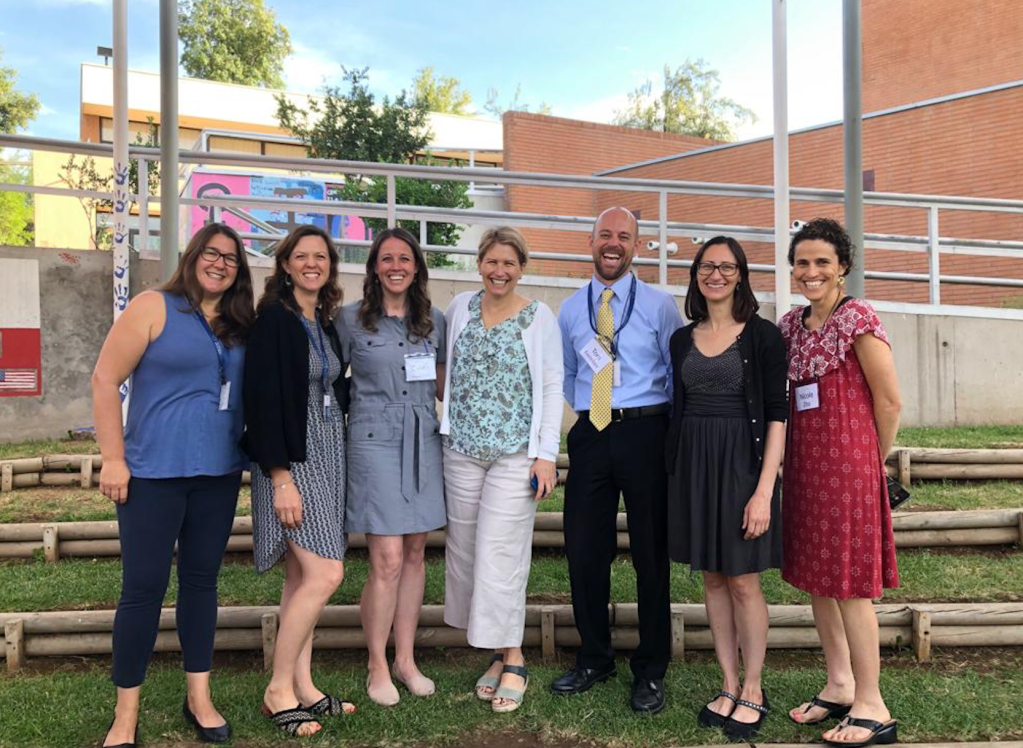
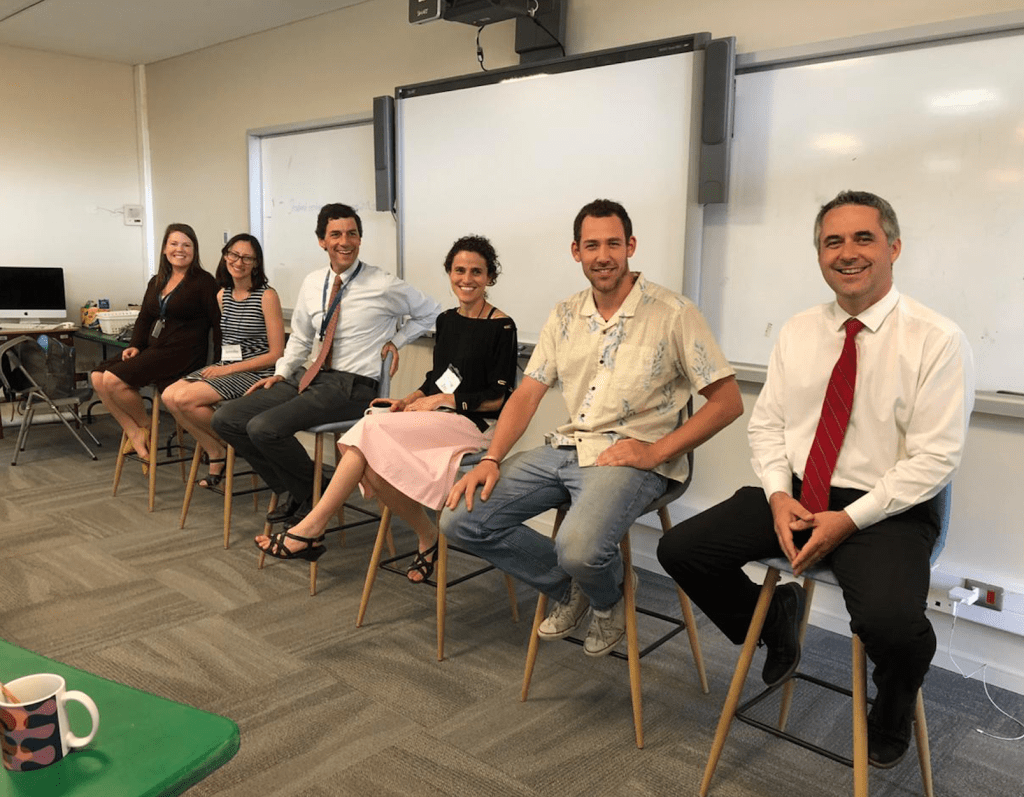
Diane Sweeney is in the middle flanked by our five learning coaches and our Director of Teaching and Learning
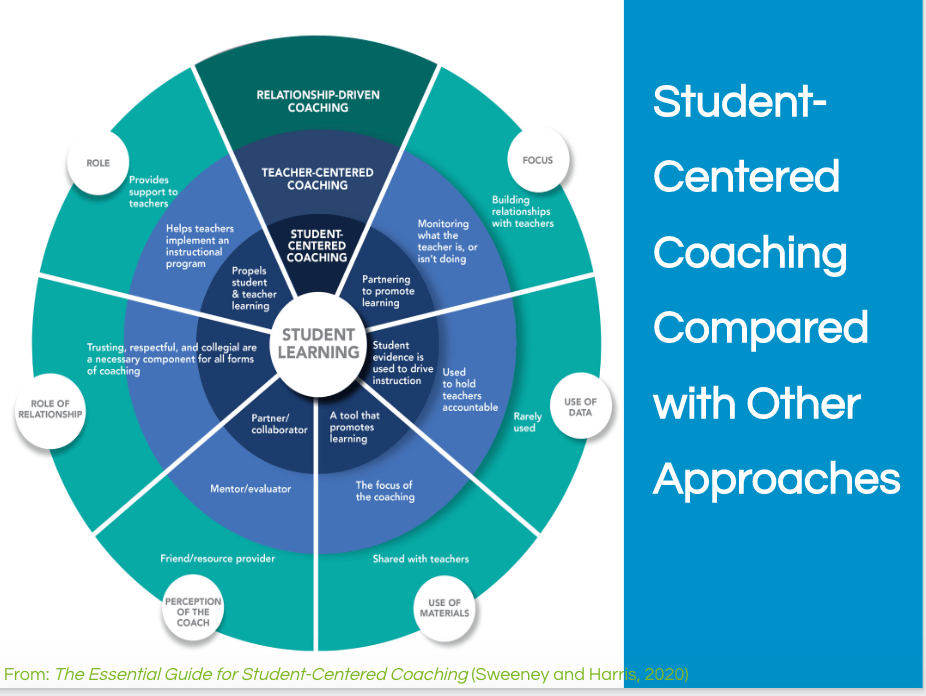
This past week, our coaching team, along with coaching guru, Diane Sweeney, led a symposium on student-centered coaching at our school, Nido de Aguilas. I have to admit that we postponed working in earnest on the individual workshops all November because we assumed that the symposium would be canceled due to the civil unrest. I am so glad that it was not canceled because the four day workshop was incredibly inspiring, grounding, and fulfilling. On Friday, I left the school feeling grateful to a part of an amazingly smart and collaborative team of learning coaches.
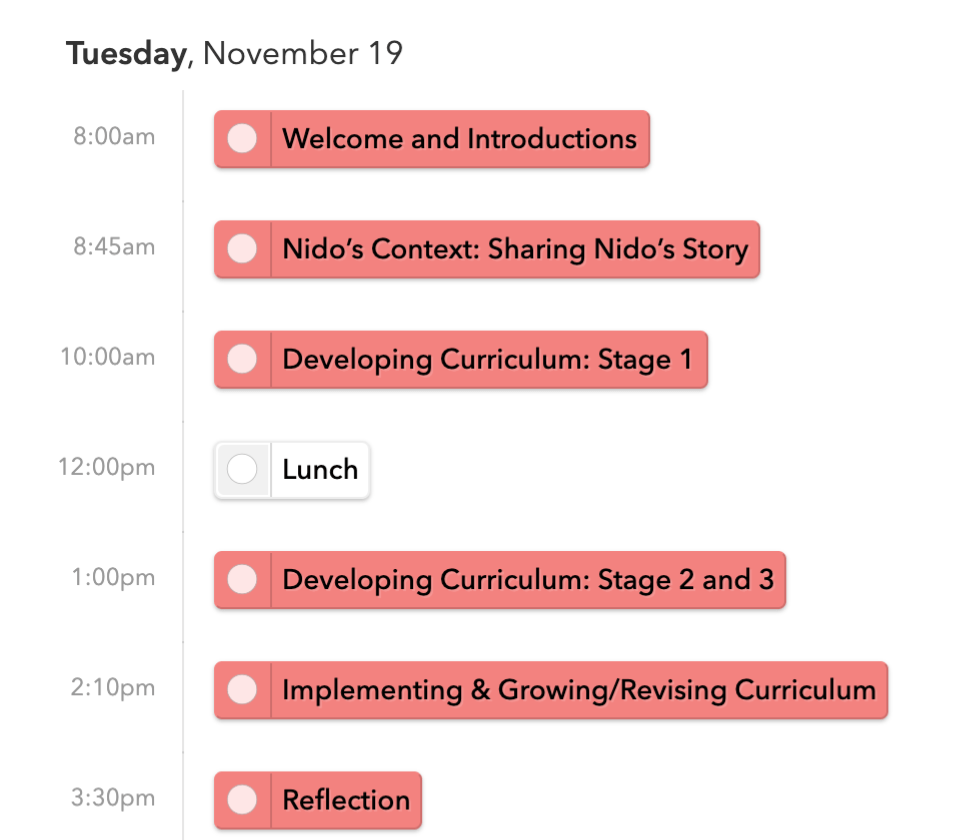
Our symposium lasted four days. Here is a copy of our agenda from the first day, which focused on curriculum coaching using the three stages of Understanding by Design. Each of the sessions was a combination of protocols, conversations, presentations, and activities.
As a team, we co-developed and co-facilitated the welcome and our story. Then the team divided and conquered. Amber and I co-facilitated the session on developing curriculum for Stage 2 and 3. For this session, we used the following questions to drive our discussion of how to coach assessments and learning activities:
How can we bring a student-centered lens?
How can we find opportunities for content coaching?
How might we facilitate the development of teams?
How can we support learning around best practices?
For one of the activities, we had participants look at a personal essay rubric. They had to consider how to lead a conversation with a team about how you might write, revise, or enhancing this rubric. They had to discuss the following: What resources might you bring? What process might you use? What roadblocks might you anticipate? How might you use the rubric for rubrics? We also had prepared coaching dilemmas for participants regarding curriculum planning. We had teachers look at the 4 dilemmas you might face when planning learning experience. They had to consider how to lead a conversation with a team about each of these dilemmas, and discuss the questions given for their specific dilemma.
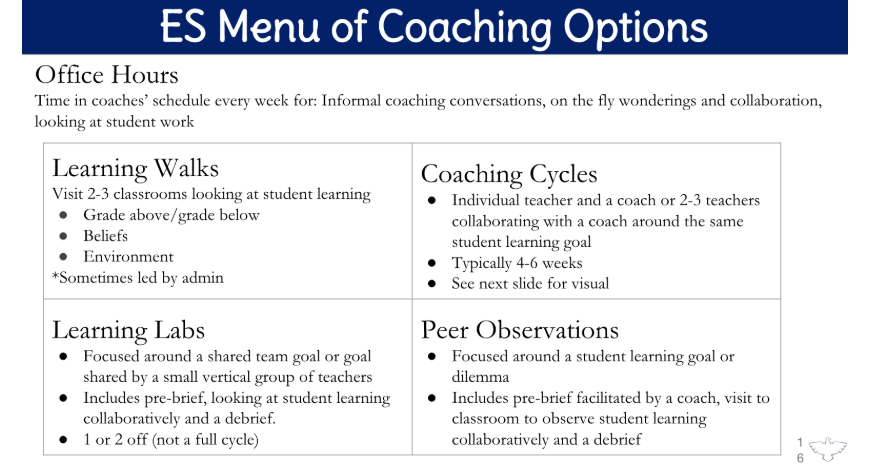
Diane Sweeney arrived on this day, and we took her out to dinner. Tom and I are new to the coaching team this year. It was challenging to be in our fourth month as learning coaches and take a lead in this symposium. The other coaches have been working together for the last five years primarily in the elementary school. They have developed a program with an extensive coaching menu that is very true to the high standards of student-centered coaching.
One of the jokes that we shared with Diane was how Tom and I feel like the team is passing us a baby golden retriever. As we develop the structures and systems for coaching in the high school, we often say to each other “Just don’t kill the puppy.” The team has been very supportive, but there have been moments this semester when a coaching cycle prematurely ended or a team of course alike teachers is not collaborating around curriculum work that make me fear that I may be killing the puppy. This week though, I received the affirmation and support that we are on track.
On the second day, many of us had the opportunity to take a learning walk in which we traveled to four elementary school classrooms. Prior to the walk, we looked at our core values and picked the one to individually focus on. We generated “look fors” in student behavior and then went into the classrooms. After each 10 minute observation, we commented on what we saw in terms of engagement, adaptability, and happiness in the classroom (three of our core values). We left teachers thank you notes and then debriefed as a group. I found the experience to help clarify what the values mean, and even though we were in lower school classrooms, I saw lots of student learning relevant to all grades such as working with others and getting into and sustaining flow.
I also lead a learning lab for a co-planning session with a grade 11-12 high school applied science teacher. Six other participants joined this session. Diane Sweeney facilitated the pre-brief; participants watched as I lead a co-planning meeting. Together we celebrated learning, looked at student work, co-developed a lesson based on our learning targets, and discussed how to co-teach the class on developing reliable survey instruments. Observers took notes regarding my moves as a facilitator and then discussed those in a debrief together.
At the end of the day, I was on a panel with another coach, two administrators, and two teachers to answer questions about our model in front of Symposium participants.
Later in the week, Amber and I co-facilitated a workshop on getting coaching cycles up and running through the lens of intentionality, visibility, and relationship building. We had participants practice a goal-setting session with a partner. We shared our tools and documents for getting mini-sessions up and running, celebrating cycles with the community, and launching coaching cycles. We shared with them a list of co-teaching options and then had them do a stoplight protocol to consider their comfort with each of the possible options. (Red was a stretch, yellow was a comfortable option, and green was an area of confidence).
By the end of the week, we were all exhausted and elated. I felt that the experience helped me to refine my own facilitation skills; I appreciated the knowledge and expertise of our team. It was tremendously rich to be able to both participate as a learner and lead simultaneously. I developed a relationship with Diane Sweeney. I look forward to a year of implementing all that we shared. Though I am missing Thanksgiving this year, I am feeling particularly grateful to be working at a school that has adopted such a robust student-centered model of supporting teachers.