Last weekend we went to a market, and I tried to buy just a few kiwis, mangoes, and a fruit that I cannot name. I handed over my $20,000 peso bill, and then Rich said to me, “Honey, that fruit is like 30 bucks.” The woman gave me some change.
Then I said, “Espera. Cuanta cuesta las mangas?” She replied something large, so I asked her to take back the mangos. At the end of the exchange, I feel like I had the kiwis and the fruit that I cannot name, the change, and the money that I initially outlayed. “Wait,” I said to Rich, “I think she just paid me for this fruit.”
“They do this all day long.” Rich countered, “They don’t seem upset. If anyone was screwed, it was you.” So, this made me think that perhaps I am just overpaying other places and just don’t even realize it. I mean, I think we are doing well in our new environs, but I just keep having these moments when I realize I have been blissfully unaware.
Then, the other night I listened to This American Life, which named exactly what I am feeling in an archived episode called “In Defense of Ignorance”. Within this episode, there is a description of The Dunning and Kruger effect. This is the phenomenon that suggests a direct correlation between incompetence and an overwhelming sense of self-confidence. In other words, most people who do poorly in all sorts of areas believe that they are actually performing with proficiency. These researchers proved this finding and replicated this idea. The gist is that whether it is skeet shooters being quizzed on gun safety or medical professionals performing a procedure, people who are failing at a task actually believe that they are doing much better than they are. The idea is sort of obvious that the very person who cannot pass the test also has very poor judgment. The most interesting aspect of this effect is that it is not just referring to idiots, but actually to all of us. At some point, we are all failing at something.
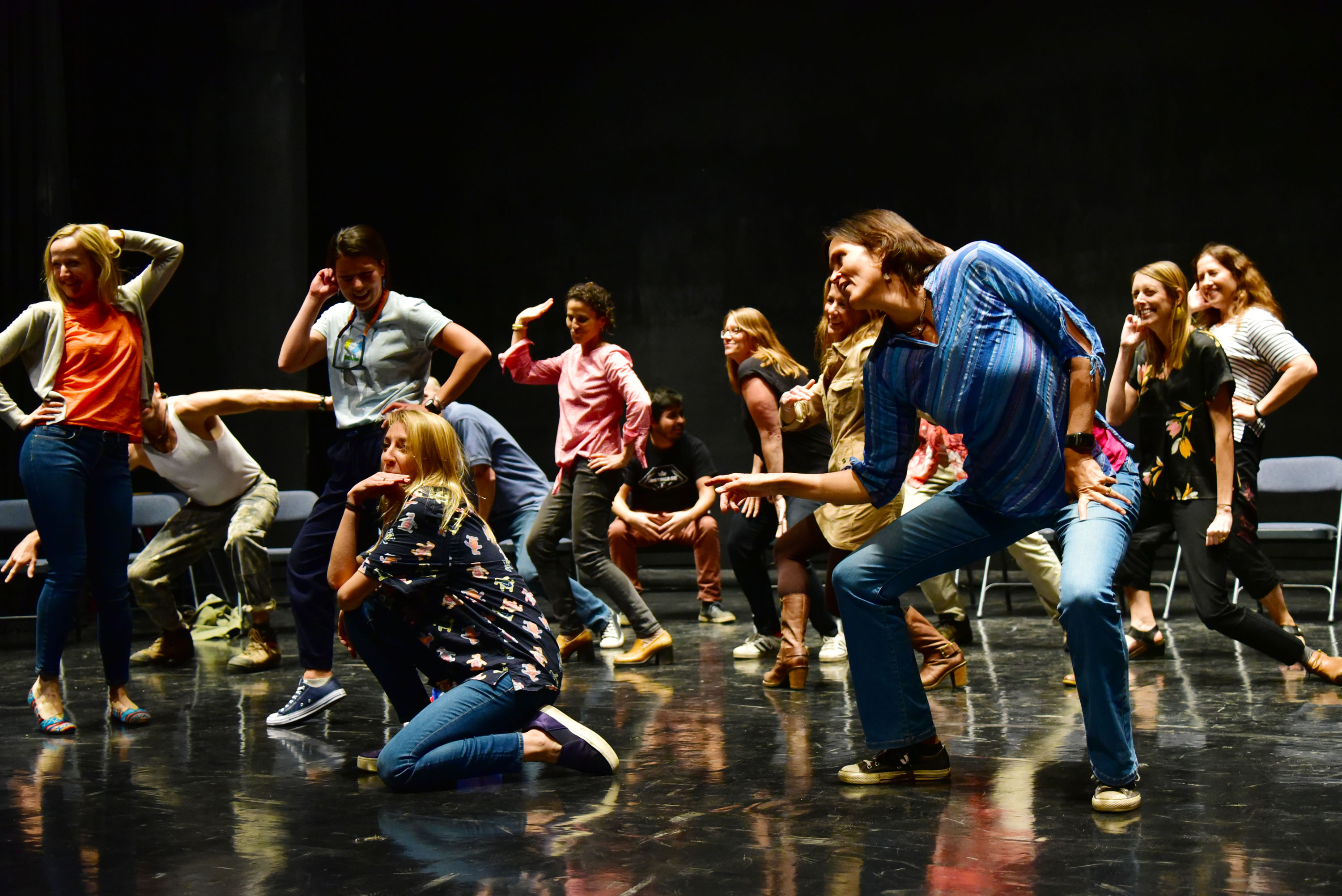
So, here we are in Santiago. And I have been thinking a lot about how well we are navigating all sorts of new challenges. And then it occurred to me. My confidence could mean that we are doing well or it could also mean that we are not doing well at all. Let me provide a few examples. This week is Spirit Week in the high-school, and each day there are competitions. On Monday, I competed in a soccer juggling contest against students. After the female contest, people congratulated me on my soccer juggling. But then the males went, and I noticed that the contest was not a timed one with someone counting how many times a person could juggle, it was a contest in which you were out when the ball touched the ground. I had been out countless times during the contest, butI had just started again and kept going. When people congratulated me, I no longer think that it was actually genuine. Later in the week, there was a video dub to the song “Another One Bites the Dust”. Our video had changed the words to “Another One Learns from Us”. Of course when I was dancing I thought I had great rhythm, but it was not until the video was playing in front of the whole high school, and I saw myself on the screen moving in a stilted, uncomfortable sort of bounce that I saw the discrepancy between the the dancing that I had assumed I was doing and reality. Think Elaine and her thumb dancing.
I am 100% sure that this is happening with the Spanish that I am butchering. On the other hand, if I was truly aware of how bad I sound in Spanish, would I continue to attempt speaking? This morning a friend of mine and I went for a walk and stumbled upon an Equestrian Centre. I tried to ask the rancher if they offered rides. They directed us to the owner’s house. Kelly shared that my words barely resembled Spanish. She then told me the words for rent, horses, and try. After the next round of a conversation, she said that I sounded great. And I think we booked a passeo scheduled for one o’clock today. We’ll see…
Similarly, I am experiencing this sense of doubt in reading a situation. Is the support I am giving to teachers helpful or inane? Are the fried potatoes and flowers that I brought to a brunch potluck too small of a contribution? When I am sitting in meetings, realizing that I am being sized up for my contribution to the humanities curriculum writing process, I wonder if the last comment I made was astute or lame. On the one hand, it is nice not to know that the person sitting across from me at the table applied for the job I now have, but on the other hand, it would be really helpful to know if the teachers in the room do not have buy-in around Common Core standards because they think that IB courses drive instruction.
So, I plow ahead asking for feedback and confirmation, trying to read that person in the room who can tell me honestly if I am on the right track. I am focusing on the process, on relationship building, and on building my competence. I concede that I am fumbling through it all right now. Hopefully, the failures are small ones. The learning curve is steep. If I can exude warmth that may be more important than competence at the moment. As Harvard Business professor and social scientist, Amy Cuddy, suggests, “People judge you really quickly, at first just on your facial features. There are two dimensions – warmth and competence. You can think of them as trustworthiness and strength. They’re first judging you on warmth; evaluating whether or not you are trustworthy. That’s much more important to them than whether or not you’re competent.” Let’s hope that is true!
 Living in Chile